Top Gym Bottle Suppliers for Global Buyers?
Choosing reliable Gym Bottle suppliers requires more than comparing prices on a product page. Global buyers need consistent quality, practical communication, and evidence behind every important claim. A supplier may offer attractive colors and low minimum orders, yet fail during leak testing or shipment inspection.
This guide examines suppliers through real procurement concerns. These include bottle materials, lid performance, insulation, printing quality, production capacity, and packaging protection. Useful details matter. Can the cap survive repeated opening? Does the silicone seal remain flexible after washing? Are food-contact documents available for the target market? Small checks can prevent expensive problems.
Samples should be tested before large orders. Always test samples. Buyers should also review factory experience, quality-control procedures, production timelines, and response speed. ISO 9001 certification can support confidence, but it does not guarantee every shipment will be perfect. That assumption needs caution. Supplier websites may show impressive factories, while actual production depends on subcontractors, busy seasons, and changing raw-material supplies.
Pricing deserves careful attention as well. A cheaper quote may exclude custom molds, printing revisions, inspection fees, or stronger export cartons. Reliable suppliers explain these costs clearly and provide realistic delivery estimates. They should also communicate shipping terms and destination requirements without vague promises.
The best choice depends on the project. A sports retailer may need durable stainless-steel models, while an event company may prioritize fast customization. This overview helps global buyers compare Gym Bottle suppliers with practical, evidence-based questions. Mistakes can still happen, but careful verification makes them less costly.
What Defines a Reliable Gym Bottle Supplier?
A reliable gym bottle supplier is defined by evidence, not attractive product photos. Grand View Research estimated the global reusable water bottle market at USD 9.67 billion in 2023, with continued growth expected through 2030. This expansion attracts many factories, but capacity alone proves little. Global buyers should request food-contact test reports, material declarations, factory audit records, and batch traceability. The documents should identify testing dates, methods, and laboratories. Vague certificates are warning signs.
Ask suppliers to provide production samples before placing a large order. Test the bottle after repeated washing, squeezing, freezing, and filling. Check the lid seal over several hours. A small leak can damage cartons, warehouse stock, and customer trust. Reliable suppliers should explain their resin type, temperature limits, mold lifespan, inspection points, and corrective-action process. They should also state realistic minimum order quantities and lead times.
Communication matters.
Mordor Intelligence forecasts steady growth in the reusable bottle market, but published market estimates vary by scope and product category. That difference deserves attention. A supplier quoting only market demand may be selling optimism, not capability. In my sourcing experience, the strongest partners share imperfect test results and discuss how they corrected them. That honesty is more useful than a flawless presentation. Buyers should verify production samples against final specifications, because approval samples can differ from mass-production output. A dependable supplier welcomes this inspection.
How to Compare Gym Bottle Materials, Designs, and Features
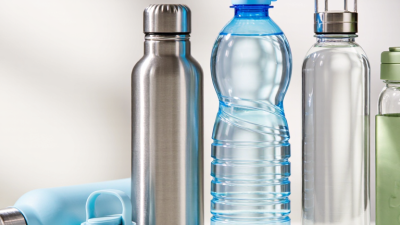
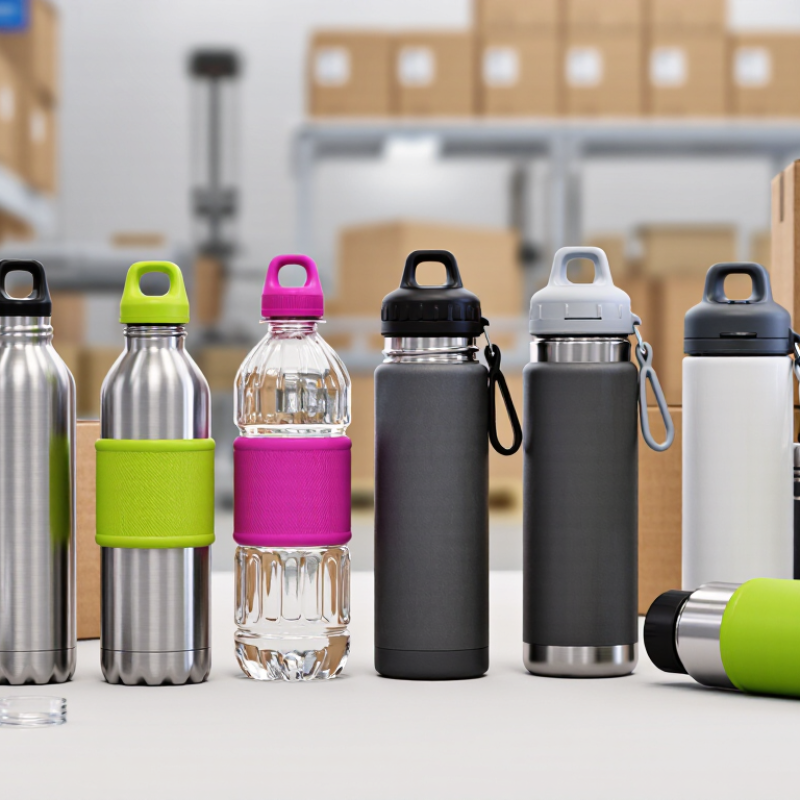
For global buyers, comparing gym bottle materials requires more than checking the lowest quote. Stainless steel offers strong insulation and resists odors, but it can feel heavy during workouts. Tritan-style plastic is lighter and clearer, while polypropylene usually provides a practical, budget-friendly option. Glass gives a clean taste, yet it needs protective sleeves and careful packaging. Ask suppliers for material declarations, food-contact test reports, and migration testing. A polished certificate without traceable laboratory details deserves a second look.
Design affects daily use. Check whether the lid opens with one hand, the mouth fits ice cubes, and the seal survives repeated shaking. Wide openings are easier to clean, but they may spill if the thread is poorly molded. Useful features include volume markings, carry loops, replaceable seals, and sweat-resistant powder coating. Insulated models should be tested with measured water temperature, not just described as “double wall.” A sleek bottle can still leak. That mistake is easy to miss during a short sample review.
Tips: Order samples from several suppliers. Fill each bottle, invert it, and shake it for one minute. Test the lid after repeated opening. Inspect threads, odors, scratches, and printed measurements. Compare packaging damage after a basic drop test. Do not judge only from photos; lighting can hide uneven seams. Request production samples before approving large quantities, because factory consistency is often less perfect than the first sample.
Gym Bottle Materials: Typical Raw-Material Density
Lower-density materials can support lighter bottle designs, while stainless steel and glass offer different durability, insulation, and sustainability characteristics.
Values represent commonly reported material-density ranges expressed as approximate midpoints: polypropylene (PP) 0.90 g/cm³, Tritan copolyester 1.18 g/cm³, borosilicate glass 2.23 g/cm³, and stainless steel 7.90 g/cm³. Finished bottle weight also depends on wall thickness, construction, lid design, and added insulation.
Where Global Buyers Can Find Leading Gym Bottle Suppliers
Global buyers can find leading gym bottle suppliers through verified B2B directories, fitness trade fairs, and specialized sourcing agencies. Regional manufacturers may offer faster communication and lower shipping costs. Larger factories often provide advanced molding equipment, custom colors, and scalable production. However, factory size does not guarantee reliable quality.
Request product samples before discussing large orders. Check the bottle’s material, lid seal, odor, wall thickness, and resistance to repeated washing. For sports use, buyers should review food-contact documentation and relevant safety test reports. Ask about minimum order quantities, production capacity, packaging, and export experience. A clear quotation should separate tooling, sampling, unit pricing, and freight charges.
Tips:
Compare at least three suppliers using the same questions. Ask for recent inspection records and a written quality standard. Confirm whether the stated delivery time includes decoration and packaging. Video audits can help, but they cannot replace independent inspections. A common mistake is trusting polished photos too quickly. Real samples sometimes reveal loose caps or uneven printing. Allow extra time for corrections. No checklist is perfect, and supplier performance can change between orders. Keep communication records, approve a sample, and define acceptable defects before production begins.
What to Check in Pricing, Customization, and Minimum Orders
When comparing gym bottle suppliers, pricing should be more than the unit figure.
Request a quote based on bottle size, material, lid type, packaging, and shipping terms. A low price can hide thin walls, weak seals, or inconsistent printing. Ask for a sample before approving bulk production. Check whether the quoted price includes mold fees and setup charges. These details often change the real cost.
Customization needs practical limits.
Confirm the logo method, print area, color references, and artwork format. For example, a curved bottle may reduce the usable branding area. Request a physical proof, not only a digital image. I have seen attractive proofs fail when small text became unclear after printing. Suppliers should explain production tolerances and replacement policies in writing. Perfect results are not always realistic.
Minimum order quantities also deserve careful review.
A smaller trial order may cost more per bottle but reduce inventory pressure. Ask whether different colors share one order quantity or require separate quantities. Clarify payment stages, sample charges, lead times, and carton dimensions. Reliable suppliers provide measurable answers instead of vague promises. Keep records of every revision. That discipline matters. A rushed decision based on one cheap quote may create expensive rework later.
How to Evaluate Quality Control, Certifications, and Shipping Support
Top Gym Bottle Suppliers for Global Buyers
Choosing a gym bottle supplier requires more than a low quotation. In practical supplier reviews, I check how quality control works on an ordinary production day. Inspect the factory. Ask for material specifications, mold approval records, and batch inspection reports. A reliable team should explain leak testing, cap torque, odor checks, and print adhesion. Request samples from different lots, not only a perfect presentation sample. Small differences matter. Check thread alignment, wall thickness, and whether the bottle survives repeated washing. Documents can mislead.
Certifications need careful verification. A valid ISO 9001 certificate supports process management, but it does not prove every bottle is safe for food contact. Request current laboratory reports for the exact resin, colorant, lid, and gasket. Requirements may differ by destination, so testing should match the buyer’s market. Confirm test dates, laboratory accreditation, sample descriptions, and report numbers. Do not accept “BPA-free” as a complete compliance claim. Ask what other substances were tested. I would also check traceability from raw material to carton label.
Shipping support often reveals a supplier’s real professionalism. Ask for a written lead-time plan covering sampling, production, inspection, and vessel booking. Confirm carton dimensions, pallet limits, export documents, HS classification, and agreed Incoterms. A pre-shipment inspection with photos can catch wrong colors or missing lids before loading. Build in a buffer. Delays happen. My own evaluations are not flawless; I once focused on unit price and underestimated relabeling costs. That mistake changed my checklist. I now require realistic schedules and written records before approving production.

 +86-13586927333
 CONTACT NUMBER
 CONTACT NUMBER