+86-13586927333


Choosing among the top Thermos Flask manufacturers and suppliers requires more than comparing prices or polished product photos. A dependable supplier should demonstrate controlled vacuum insulation, food-grade stainless steel, leak-resistant seals, and repeatable quality across large production batches. Small details matter. A lid should close smoothly, the mouth should pour cleanly, and the outer wall should remain comfortable after hours of use.
The industry’s technical foundation reaches back to Sir James Dewar, the scientist whose vacuum vessel inspired modern insulated bottles. In his patent, Dewar stated, “The object of my invention is to provide a vessel for containing liquids or gases.” That simple purpose still guides serious manufacturers today. Performance depends on thermal retention, material safety, welding quality, and dependable testing. It also depends on honest specifications.
Supplier claims can be impressive.
Reality may differ.
This guide examines leading Thermos Flask manufacturers and suppliers through an E-E-A-T-focused lens. It considers manufacturing experience, engineering capability, product consistency, customization, certifications, export readiness, and after-sales support. Factory audits, sample testing, and transparent documentation deserve attention before any purchase decision. A supplier may offer attractive branding but lack stable insulation performance. Another may charge more while delivering stronger quality control and longer service life.
The best choice is rarely the loudest name. It is the supplier that can explain its process clearly, support its claims with evidence, and improve when testing exposes weaknesses. That last point is often overlooked. Even established manufacturers need careful review.
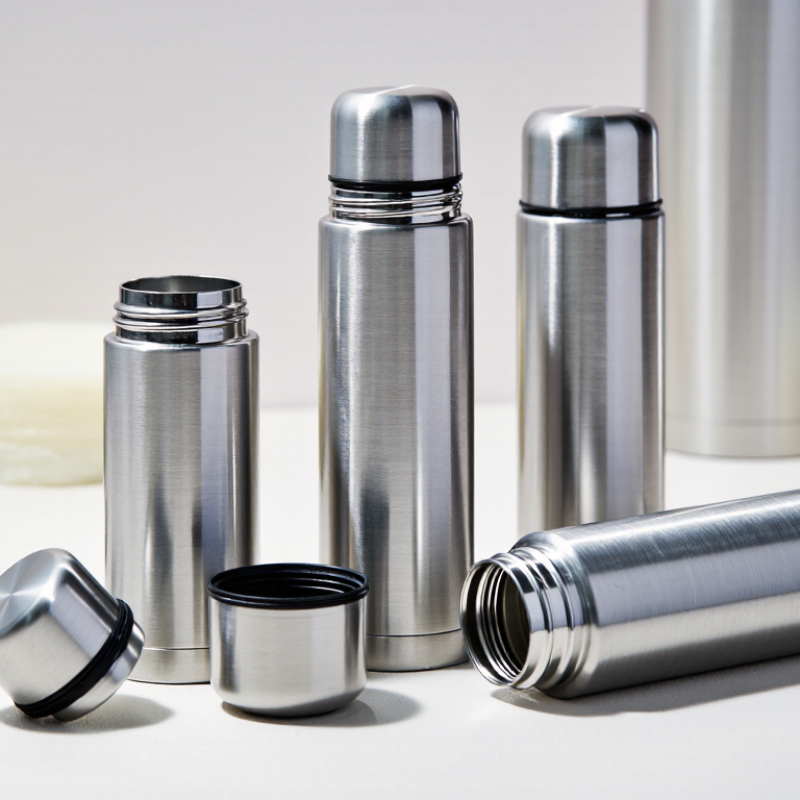
What Defines a Reliable Thermos Flask Manufacturer or Supplier
A reliable thermos flask manufacturer proves performance beyond attractive product photos. During factory evaluations, I look for clear material records, controlled welding, and repeatable insulation tests. Stainless steel should have documented specifications and food-contact suitability. The inner wall must resist corrosion, unusual odors, and flavor transfer after repeated use.
Testing should reflect real conditions. Inspectors can fill flasks with hot water, record temperature changes, and examine seals after several hours. Cold retention matters too. Reliable suppliers keep test results, batch numbers, and inspection dates available for review. They should explain how vacuum pressure, lid fit, and gasket quality are checked. Vague answers are warning signs.
Small details reveal manufacturing discipline. Threads should turn smoothly, without metal dust or sharp edges. The lid should close firmly but not require excessive force. Packaging must protect the flask from dents during transport. A polished sample can mislead. I once noticed excellent insulation on a sample, but inconsistent lid fitting across the production batch. That finding changed the evaluation. Supplier communication also matters. Can the team respond clearly when specifications change? Do they report defects honestly? No factory is perfect, and occasional faults deserve attention rather than denial. A dependable partner accepts corrective actions, updates production records, and provides replacement support when quality falls below the agreed standard.
A practical supplier assessment model based on the quality, safety, performance, and delivery factors most relevant to vacuum flask sourcing.
The weighted score uses a 100-point evaluation framework. Thermal performance and product safety receive the highest weighting because they directly affect user experience and regulatory compliance. Consistent quality control, traceable materials, reliable delivery, and responsive after-sales support are also essential when selecting a thermos flask manufacturer or supplier.
The thermos flask market is expanding through outdoor use, commuting, foodservice, and corporate gifting. Grand View Research reports that the global vacuum insulated bottle market reached billions of dollars in recent years, with steady growth expected through 2030. Estimates differ by report scope, so buyers should inspect each methodology carefully.
Stainless steel vacuum flasks lead the premium segment. They offer strong impact resistance, reliable heat retention, and easier cleaning than many alternatives. Manufacturers commonly use food-grade 304 steel, while 316 steel suits harsher environments. Plastic insulated flasks remain lighter and cheaper. Glass-lined models preserve taste well, but they need better protection during transport. Smart flasks add temperature displays and reminders, though electronics increase repair concerns.
Regional demand changes the supplier mix. Asia-Pacific supports large-scale production and competitive minimum order quantities. Europe places greater emphasis on material traceability, packaging reduction, and product safety documentation. North American buyers often prioritize wide-mouth designs, sport lids, and long warranty support. Fortune Business Insights identifies rising outdoor recreation and reusable drinkware adoption as key market drivers.
A qualified supplier should provide thermal-retention test results, leak-testing records, material certificates, and factory audit evidence. ISO 9001 can support process consistency, but it does not prove every product is safe or durable. That distinction matters. In practice, sample testing often reveals weak seals, uneven powder coating, or lids that are difficult to clean. Supplier rankings should therefore include product type, target market, certification quality, tooling capability, and after-sales responsiveness.
Reliable thermos flask suppliers treat materials as a control system, not a purchasing detail. World Stainless reported 58.4 million tonnes of crude stainless steel production in 2023. This scale does not guarantee safe flask construction. Suppliers should verify steel grades, surface finishes, gasket composition, and coating stability before production begins. Each batch needs traceable certificates and documented inspection records. Small scratches matter.
Safety testing Safety testing should cover leakage, pressure changes, heat retention, odor transfer, and repeated washing. Food-contact materials also require migration testing under realistic temperature conditions. A flask used for hot tea may behave differently from one holding acidic juice. Suppliers should test both. Packaging must protect the mouthpiece from dust and handling damage. I have seen quality plans focus heavily on insulation while ignoring cap components.
Quality systems make these controls repeatable. The ISO Survey 2022 recorded more than one million ISO 9001 certificates worldwide, showing how widely formal quality management is used. Yet certification alone cannot prove every flask is safe. Auditors should review production samples, corrective actions, calibration records, and supplier changes. Statistical sampling helps, but it can miss rare defects. For that reason, responsible suppliers combine laboratory data with factory inspections and field feedback. The process is never perfectly clean. That deserves attention.
Comparing thermos flask manufacturers starts with intended use, not attractive catalog photos.
In practical sourcing work, I examine capacity, insulation structure, lid design, and surface finishing. A 500 ml flask may suit commuting, while larger models fit outdoor teams. Ask whether the inner liner uses appropriate stainless steel. Check welds, threads, and silicone seals closely. Small details matter.
Thermal retention should be tested with a clear method, temperature, and time period. A vague “keeps hot all day” claim is not enough. Request sample test records and repeat the test independently. Leak testing also matters. Fill the flask, close it firmly, and place it sideways overnight. Failures become obvious. I once focused too much on appearance and missed a lid that loosened after repeated washing. That was a costly lesson.
Supplier reliability includes more than factory capacity. Compare sample consistency, minimum order quantities, production schedules, packaging quality, and communication speed. A dependable supplier should provide material documents, food-contact records, inspection procedures, and batch traceability. Ask how defects are handled, not only how products are made. Factory audits can reveal crowded work areas, weak storage practices, or poor process control. Still, audits are snapshots. Regular inspections and independent testing offer stronger evidence. Price deserves attention, but an unusually low quote may hide thinner steel, weaker seals, or unstable quality.
Global thermos flask production is moving toward safer materials, lower energy use, and smarter customization. Stainless steel remains popular because it resists corrosion and supports repeated daily use. Manufacturers now test inner walls, vacuum performance, lid seals, and coating durability more carefully. Small defects matter. A weak seal can turn a useful flask into a warm, leaking container.
Sustainability is changing supplier decisions. Factories are reducing scrap, improving metal recovery, and using packaging with less plastic. However, recycled content does not automatically prove responsible production. Buyers should request material certificates, food-contact test reports, and traceable inspection records. Digital production systems also bring faster sampling and clearer quality data. Yet automation cannot replace skilled checks on threads, welds, and silicone rings. This is an area where the industry still needs improvement.
Tips: Compare suppliers by testing depth, not only price. Ask for vacuum-retention results after repeated opening cycles. Check whether the supplier can provide small trial orders, replacement parts, and stable lead times. Review the flask after washing, dropping, and carrying it in a full bag. Real use can expose problems that factory samples hide. Fresh designs are valuable, but practical handling should guide the final choice.