+86-13586927333


Choosing a reliable Thermos Flask supplier requires more than comparing prices and attractive product photos. Global buyers must examine materials, insulation performance, manufacturing consistency, and export experience. A polished catalog can hide important details.
This guide introduces 10 Thermos Flask suppliers serving international markets. Each supplier should be assessed through practical criteria, including stainless steel grade, lid safety, vacuum retention, leak resistance, and customization capability. A quality flask should survive repeated opening, hot filling, cold storage, and transport handling. Buyers should also review factory audits, product certifications, testing reports, and customer references before placing large orders.
Details matter. Ask for samples first. Test them overnight. Check whether the exterior stays comfortable while the drink remains hot. Inspect the seal after several washes. Confirm whether the stated capacity matches the actual fill volume. These small checks often reveal manufacturing differences that photographs cannot show.
The comparison also considers minimum order quantities, packaging options, production lead times, communication quality, and shipping support. Some suppliers may offer excellent prices but limited customization. Others may provide stronger quality control with higher costs. No supplier is perfect for every market, and published specifications should never replace independent verification. Regional regulations, labeling requirements, and food-contact standards can also vary. Buyers should confirm current requirements with qualified local professionals.
The goal is practical guidance, not a universal ranking. Supplier performance can change over time. Request updated documents and recent samples. A careful purchasing decision protects product quality, brand reputation, and long-term customer trust.
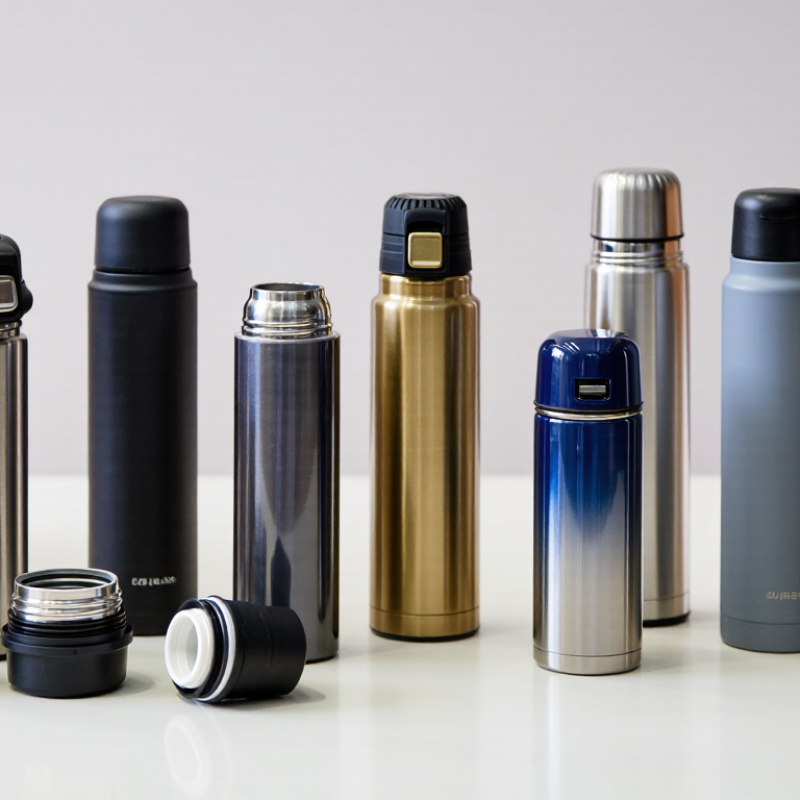
A reliable thermos flask supplier proves performance before discussing price. Product samples should show stable heat retention, leak resistance, and smooth threading after repeated use. Ask for test records, not attractive photographs. A useful inspection covers vacuum integrity, lid durability, surface coating, and food-contact safety. Stainless steel grades should be clearly identified, with material certificates available for review.
The ISO Survey 2022 reported more than 1.2 million ISO 9001 certificates worldwide. Certification does not guarantee perfect production. It does indicate a documented quality system when the certificate is valid and relevant. Buyers should also examine batch traceability, corrective-action records, and production capacity. The World Bank Logistics Performance Index 2023 measures shipment tracking, service quality, and timeliness. These details matter when thousands of flasks must arrive together. A supplier that cannot explain delays may create expensive inventory gaps.
Tips: Request a pilot order before a large contract. Test flasks under real conditions, including hot water, cold storage, drops, and daily washing. Check whether the supplier repeats tests across different batches. I would also ask for packaging dimensions and carton photos; small errors can increase freight costs. The uncomfortable part is that even a responsive supplier can miss a deadline. Build a buffer. That is not pessimism. It is practical sourcing. Market reports often show strong growth in reusable drinkware, but demand forecasts cannot replace factory evidence. A clear specification, written approval process, and honest communication define reliability better than a low quotation.
Comparing thermos flask suppliers requires more than checking unit prices. Grand View Research valued the global reusable water bottle market at about USD 8.2 billion in 2023. It also expects steady growth through 2030. This demand increases supplier pressure. Buyers should compare material grades, vacuum performance, factory capacity, and export experience. A reliable supplier should provide stainless steel documentation, food-contact test reports, and batch traceability. Ask for 304 or 316 stainless steel certificates when durability matters.
Product testing reveals more than catalog claims. Request samples and measure heat retention after 6, 12, and 24 hours. Check the lid seal after repeated opening. Review leakage tests, coating adhesion, and drop-test results. ISO 9001 certification supports process control, but it does not guarantee every flask is perfect. That distinction is easy to miss. The International Trade Centre’s Trade Map data can also help compare a supplier’s export activity by country and product category. A low price may hide higher defect rates, slower replacement service, or unstable raw-material sourcing.
Tips: Compare at least three suppliers using the same specification sheet. Confirm minimum order quantity, tooling fees, sample time, and warranty terms in writing. Review recent audit evidence, not only certificates. Ask who performs final inspection. Keep one retained sample from each production batch. Also, challenge impressive claims. A supplier promising “48-hour heat retention” should explain the test temperature, filling volume, and measurement method. Without those details, the number has limited value.
For global buyers, a reliable thermos flask supplier must prove more than attractive product photos. Food-contact stainless steel, usually 304 grade, offers strong corrosion resistance for daily use. Some applications may require 316 steel, especially in demanding environments. Buyers should request material declarations and migration test reports.
Vacuum performance needs practical testing. A supplier should measure heat retention after defined time periods, not simply promise “all-day insulation.” Leak testing is equally important. A bottle should survive shaking, inversion, and repeated lid opening. BPA-free plastic, silicone sealing rings, and odor-resistant components also deserve verification. Details matter. Ask for batch records, inspection photos, and quality-control procedures.
Customization can include capacity, mouth width, lid structure, powder coating, color matching, laser engraving, and retail packaging. Wide openings help cleaning and ice filling, while narrow openings may preserve temperature more efficiently. Packaging should protect painted surfaces during long-distance transport. In practical sourcing work, I have seen buyers focus heavily on logos and overlook replacement seals. That mistake can increase complaints later. Suppliers should provide samples before mass production, with clear tolerances for dimensions, color, printing, and vacuum performance. Certifications must match the destination market and product claims, rather than relying on generic documents. A sample may pass once. Repeated testing is safer.
Ordering from one of the ten leading thermos flask suppliers requires more than comparing unit prices. Experienced buyers usually request samples before placing bulk orders. Check the lid seal, vacuum insulation, coating, and stainless-steel grade. A flask may look polished but lose heat quickly after several hours. Ask suppliers for test reports, production photos, and clear quality-control procedures. Reliable suppliers should explain their warranty terms without vague promises.
Pricing depends on capacity, materials, printing, packaging, and order volume. Request a detailed quotation with separate costs for tooling, cartons, and inspection. International shipping can change the final price sharply. Compare sea freight, air freight, and delivery time. Confirm the trade terms, destination port, customs documents, and responsibility for damaged cartons. Small details matter. A low factory price may become expensive after freight, taxes, and rework.
Tips: Order a small trial batch. Measure leakage after transport. Use stronger cartons for long routes. Confirm whether food-contact documentation is available for your target market. Keep every specification in writing, including color codes and logo placement. One practical mistake is trusting a supplier’s estimated shipping date too early. Ports can become congested, and packaging approval may take longer than expected. I would also leave a small budget for inspection and unexpected handling fees. That cushion often protects the launch schedule.
Selecting the right thermos flask supplier requires more than comparing prices. Global buyers should examine product quality, production control, and communication before signing a contract. A polished catalog can still hide weak process control.
Request samples from several suppliers and test them under real conditions. Check heat retention after 12 and 24 hours. Inspect the lid, seal, thread, coating, and inner wall for defects. A simple leak test can reveal poor assembly.
Ask for stainless steel specifications, food-contact documents, and laboratory test reports. Verify whether these documents match the actual product.
Supplier experience matters, but it should be measurable. Ask about export markets, monthly capacity, minimum order quantities, and normal lead times. Review factory photos, production videos, or arrange an independent inspection.
Confirm how the supplier handles damaged goods and delayed shipments. Written answers are more useful than friendly promises.
Communication deserves careful attention. Can the supplier explain technical details clearly? Do they confirm packaging dimensions, carton strength, and labeling requirements? Small misunderstandings can create expensive customs or warehouse problems.
One weakness is easy to overlook: some suppliers offer attractive samples but change materials during mass production. Use an approved sample, detailed specifications, and pre-shipment inspection. Even experienced buyers miss details. That is why every assumption should become a written requirement.