+86-13586927333


Choosing the right Vacuum Flask Thermos supplier can shape product quality, delivery reliability, and customer trust. Global buyers need more than attractive catalogs and competitive prices. They should examine manufacturing experience, material control, testing procedures, and export performance. A dependable supplier should clearly explain stainless steel grades, insulation performance, lid design, sealing methods, and available capacities. Small details matter. A weak seal can cause leakage during shipping or daily use.
This guide introduces leading Vacuum Flask Thermos suppliers for international buyers. It considers factory capability, product consistency, customization support, minimum order quantities, and communication standards. Buyers may also review food-contact documentation, quality management systems, production audits, and independent test reports. These records do not guarantee perfection. They provide useful evidence. Samples should still be tested under realistic conditions, including hot water retention, cold storage, repeated opening, and drop resistance.
Practical purchasing experience shows that the lowest quotation is rarely the complete answer. Tooling fees, packaging changes, inspection costs, freight terms, and replacement policies can alter the final value. Some suppliers communicate well during sampling but respond slowly after production begins. That risk deserves attention. Lead times may also change during peak seasons or material shortages. Therefore, buyers should confirm every important detail in writing and compare several qualified factories. This overview may not cover every regional specialist, and supplier information can change. Careful verification remains essential before signing a purchase agreement.
Vacuum Flask Thermos Products and Their Global Market Uses
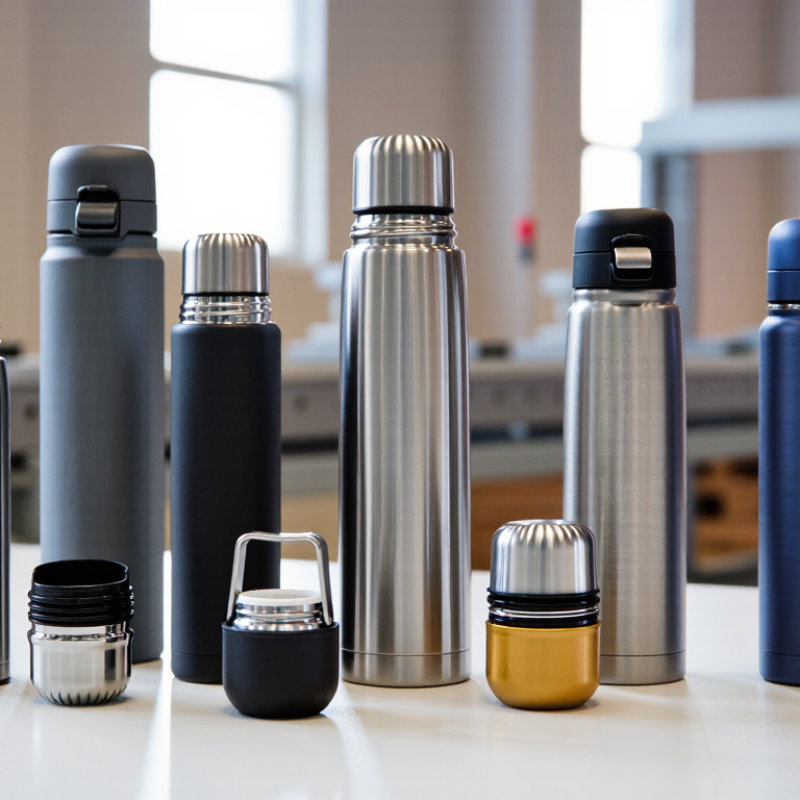
Vacuum flask thermos products serve different habits, climates, and distribution channels worldwide. Stainless steel bottles support daily commuting, school use, travel, and outdoor work. Smaller flasks fit handbags, lunch boxes, and hotel rooms. Larger models suit construction teams, tour groups, and shared office kitchens. Fit matters. A narrow mouth helps prevent spills, while a wide mouth makes cleaning and adding ice easier.
Global buyers usually compare insulation time, capacity, lid design, surface durability, and shipping efficiency. A reliable supplier should provide material declarations, leak-test records, temperature-retention data, and clear carton specifications. Food-contact requirements vary by market, so documentation must match the destination country. Reusable tumblers and sports bottles often need different cap structures. Some buyers also request laser marking, color matching, gift packaging, or multilingual labels.
In practical sourcing, performance claims deserve careful checking. Retention results can change with fill volume, opening frequency, liquid temperature, and room conditions. A flask that performs well in a laboratory may behave differently inside a hot delivery van. Minor issues matter, such as a lid that traps odor or a powder coating that scratches near metal shelving. I have found that simpler parts often create fewer complaints, although they may look less impressive. Suppliers should explain production tolerances, replacement-lid availability, minimum order quantities, and inspection procedures before shipment. Details matter.
This chart presents representative commercial capacity ranges commonly used in global vacuum flask markets. Smaller bottles are widely used for commuting and personal hydration, while larger products serve food storage, family use, hospitality, and catering applications. Actual specifications vary by supplier, region, and buyer requirements.
International buyers should judge thermos suppliers beyond attractive catalogs. Mordor Intelligence’s Vacuum Insulated Flask Market report projects steady market growth through 2030, increasing pressure on quality and delivery. A reliable supplier should provide recent factory-audit records, production capacity, and traceable material certificates. Ask for stainless-steel grade, coating composition, and food-contact test results. “304 stainless steel” alone is not enough. Request batch-level documentation.
Performance needs measurable proof. Suppliers should test heat retention, cold retention, leakage, drop resistance, and lid durability. Testing should follow recognized methods, such as ISO or ASTM procedures, where applicable. Check whether laboratories are independent and accredited. The U.S. FDA’s food-contact guidance and EU food-contact framework can help buyers review migration risks. Results should include test dates, sample codes, and product specifications. A beautiful sample can still hide inconsistent insulation.
Tips: Request three production samples, not one. Compare temperature readings after 6, 12, and 24 hours. Review carton strength, barcode accuracy, and shipping records. Confirm minimum order quantities, lead times, spare-part support, and corrective-action procedures in writing. The International Trade Centre’s trade data tools can help compare supplier countries and export patterns, but trade volume does not prove quality. That distinction is easy to miss. Supplier evaluations should combine documents, factory evidence, sample testing, and honest communication. Mistakes still happen, especially when buyers trust polished presentations too quickly.
Vacuum flask production is concentrated in several practical manufacturing regions. China remains a major source, with strong clusters in Zhejiang, Guangdong, and Jiangsu. These areas offer stainless steel forming, vacuum sealing, polishing, and packaging under one supply network. India has growing capacity for insulated bottles and food containers, often serving regional markets with flexible order quantities. Vietnam is also attracting buyers seeking diversified production and competitive labor costs.
Supplier categories differ more than many buyers expect. OEM factories develop products from technical drawings, including lid systems, wall thickness, coatings, and logo placement. Specialized manufacturers usually focus on drinkware, food jars, or outdoor vessels. Wholesalers provide mixed models and faster purchasing, but customization may be limited. Trading companies can coordinate several factories, although their production visibility requires careful checking.
Factory audits should examine weld consistency, vacuum retention, inner-wall cleanliness, and carton drop protection. Request recent test records, sample units, and clear material specifications. A 304 stainless steel claim still needs verification through documentation or independent testing. During sourcing work, I have found that attractive samples sometimes hide weak lids or uneven powder coating. That lesson is easy to forget. Buyers should compare factory capacity, not only quoted price. Small suppliers may offer careful communication, while large plants often handle container-scale orders better. Delivery estimates can also shift during peak seasons, so a written production schedule matters.
| Manufacturing Region | Supplier Category | Typical Product Range | Common Materials | Key Manufacturing Strengths | Indicative MOQ | Typical Production Lead Time | Common Compliance Documentation | Best Fit for Global Buyers |
|---|---|---|---|---|---|---|---|---|
| Eastern China Guangdong and Zhejiang |
Large-scale OEM and ODM factories | Vacuum bottles Travel mugs Food jars Sports bottles | 304 stainless steel; 316 stainless steel for selected premium applications; polypropylene; Tritan; silicone | Broad tooling resources, automated forming and polishing, vacuum insulation, laser engraving, powder coating, color matching, and high-volume assembly | Usually 500–3,000 units per design; customized tooling may require higher commitments | Approximately 30–60 days after artwork and sample approval | Food-contact declarations, migration-test reports, LFGB or FDA-related test reports where applicable, REACH and RoHS documentation for relevant components | Retail programs, private-label collections, promotional campaigns, and large recurring orders |
| Northern China Jiangsu and surrounding provinces |
Industrial metalware and vacuum-container specialists | Thermos flasks Large-capacity bottles Lunch containers Coffee pots | Stainless steel inner and outer shells; copper or aluminum vacuum-layer components in selected designs; PP and silicone closures | Deep drawing, shell welding, vacuum pumping, thermal-performance testing, and production of durable household and outdoor containers | Commonly 1,000–5,000 units per model for customized production | Approximately 35–65 days, depending on structure, decoration, and testing requirements | Material certificates, food-contact testing, insulation-performance records, factory quality-control reports, and shipment inspection documents | Household goods distributors, outdoor-equipment importers, and buyers requiring robust metal construction |
| India Gujarat, Maharashtra, Delhi NCR, and Tamil Nadu |
Stainless-steel householdware and regional OEM suppliers | Vacuum bottles Serving flasks Lunch boxes Kitchen drinkware | 304 stainless steel; food-grade plastics; silicone seals; selected copper or brass exterior elements for traditional designs | Stainless-steel fabrication, householdware production, brushed and polished finishes, regional design adaptation, and smaller production runs | Often 300–2,000 units per design, subject to customization and factory capacity | Approximately 30–75 days | Food-contact test reports, material declarations, batch inspection records, and destination-market documentation when requested | Mid-volume importers, householdware wholesalers, value-oriented collections, and regionally adapted products |
| Vietnam Southern and Northern industrial zones |
Export-oriented drinkware and contract manufacturers | Insulated tumblers Water bottles Travel mugs Corporate gift sets | 304 stainless steel; recycled stainless steel options; polypropylene; silicone; powder-coated finishes | Export production, assembly, surface finishing, packaging development, and supply-chain diversification for buyers seeking alternatives to China | Commonly 1,000–5,000 units per design | Approximately 35–70 days, excluding sea freight and product approval time | Food-contact declarations, social-compliance audit reports, factory inspection records, and applicable destination-market test reports | Brand owners diversifying Asian sourcing, promotional merchandise programs, and export-focused retail orders |
| Southeast Asia Thailand, Indonesia, and Malaysia |
Regional consumer-goods and promotional-product suppliers | Basic vacuum bottles Tumblers Gift sets Outdoor drinkware | 304 stainless steel; PP; silicone; coated stainless-steel exteriors | Assembly, decoration, packaging, regional distribution, and moderate-volume production for consumer and corporate-gift channels | Usually 500–3,000 units per design | Approximately 30–60 days | Product safety declarations, food-contact reports, packaging specifications, and supplier or third-party inspection records | ASEAN distribution, promotional orders, seasonal programs, and buyers prioritizing regional logistics |
| Türkiye Industrial and export manufacturing centers |
European-region metalware and private-label suppliers | Household flasks Coffee and tea containers Giftware Retail drinkware | Stainless steel; polypropylene; silicone; coated or polished metal surfaces | Metal forming, householdware design, decorative finishing, packaging, and relatively convenient road or sea access to European markets | Commonly 500–2,500 units per design | Approximately 30–60 days | Food-contact declarations, product test reports, packaging compliance information, and quality inspection documents | European wholesalers, private-label householdware programs, and buyers seeking shorter regional replenishment routes |
| Europe Germany, Italy, Poland, and nearby markets |
Premium, design-led, and specialist manufacturers | Premium flasks Professional beverage containers Design drinkware Corporate gifts | High-grade stainless steel; recycled steel options; BPA-free polymers; silicone; premium coatings | Design engineering, product testing, traceability, sustainable-material programs, premium finishing, and smaller-batch production | Often 100–1,000 units per design, with higher unit costs | Approximately 45–90 days for customized products | EU food-contact compliance files, REACH information, recycled-content evidence where claimed, ISO-based quality records, and packaging documentation | Premium retail, professional users, sustainability-focused buyers, and quality-sensitive European distribution |
| North America United States, Canada, and Mexico |
Regional assemblers, contract manufacturers, and custom promotional suppliers | Promotional bottles Outdoor drinkware Corporate giftware Replacement components | Imported stainless-steel bodies combined with locally printed, assembled, packaged, or customized components | Shorter domestic fulfillment, customization, decoration, kitting, packaging, and compliance support for local distribution | Typically 100–2,000 units for decorated or assembled programs | Approximately 15–45 days after components are available | Food-contact declarations, CPSIA-related documentation for applicable products, packaging records, and third-party inspection reports | Fast-turn promotional campaigns, domestic replenishment, and buyers needing local customization or fulfillment |
Production capability reveals how consistently a supplier can deliver. A serious factory should show its welding, polishing, cleaning, and inspection processes. Ask how workers check each flask before packing. Useful controls include pressure testing, vacuum measurement, surface inspection, and barcode-based traceability.
Confirm monthly capacity, minimum order quantities, tooling ownership, and backup equipment. A small pilot order can expose problems that a sales presentation hides.
My supplier reviews often begin with factory records, not promises. Yet paperwork alone cannot guarantee stable quality. Sampling may miss defects, especially during busy seasons. Buyers should compare pre-shipment results with independent inspections and keep approved samples for reference. That sounds cautious. It is necessary. Honest suppliers also explain their weak points, such as limited automation or slower customization. This transparency often proves more valuable than polished certification folders.
Reliable sourcing starts with product specifications, not attractive catalog photos. Define capacity, steel grade, lid structure, insulation target, and surface finish. For food-contact use, request material declarations and migration test reports. A supplier should explain its testing process clearly. Ask for factory photos, production capacity, and recent inspection records. Samples matter. They reveal sealing problems quickly.
Pricing depends on volume, tooling, packaging, decoration, and shipping terms. Compare quotations line by line. A low unit price may exclude molds, inner cartons, or export packing. Request prices under EXW, FOB, and CIF terms when practical. Confirm the minimum order quantity and payment schedule before approval. One overlooked cost can damage the whole margin.
Customization may include colors, laser marks, lids, handles, and gift boxes. Confirm artwork files, color references, and sample approval procedures. Allow time for tooling and pre-production samples. I have seen attractive samples hide weak hinges and uneven coating. Do not rely on one inspection point. Use checks for vacuum performance, leakage, odor, scratches, carton strength, and quantity. Small failures become expensive overseas.
International logistics needs equal attention. Confirm carton dimensions, gross weight, pallet limits, and loading plans. Stainless products are durable, but poorly packed cartons still arrive dented. Ask for commercial invoices, packing lists, certificates, and accurate product descriptions. Build buffer time for port delays and customs review. The cheapest freight option is not always the safest. Pricing assumptions should be tested again before shipment.