 +86-13586927333

Thermos cup factory
0102030405
2025 Frankfurt Consumer Goods Fair: Trends and Opportunities for Stainless Steel Cup Innovations
2025-12-30
2025 Frankfurt Consumer Goods Fair: Trends and Opportunities for Stainless Steel Cup Innovations
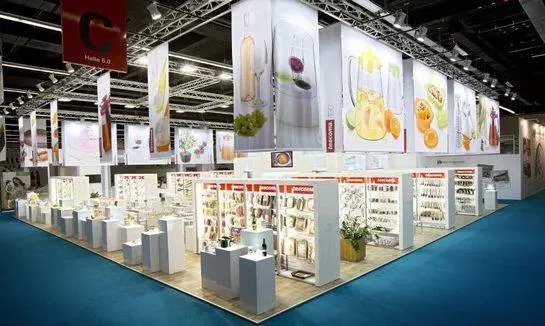
The 2025 Frankfurt Consumer Goods Fair in Germany serves as a pivotal platform for the stainless steel cup industry to gain trend insights and secure global orders. However, many cross-border buyers face challenges such as product selection pitfalls, unclear compliance requirements, and missing out on promising new products—directly impacting their overseas market expansion and profit margins. This article breaks down four core trends in stainless steel cup innovations based on the fair’s key highlights, outlines new EU compliance standards, and shares precise product selection strategies to help you swiftly seize market opportunities. Let's now analyze the most prominent trends emerging from the exhibition.
I. Environmental Sustainability Takes Center Stage: How Can Stainless Steel Cups Embrace Green Consumption?
Amidst the global wave of green consumption, environmental friendliness has become an essential threshold for stainless steel cups entering overseas markets. At the 2025 exhibition, over 60% of new products prominently featured eco-friendly concepts, focusing primarily on plastic reduction designs and recyclable materials.
Mainstream eco-solutions fall into two categories: First, optimizing all-metal structures—using 304 or 316 stainless steel for cups and lids while minimizing plastic components, except for essential food-grade silicone seals. Second, material recycling upgrades—manufacturing cup bodies from recycled stainless steel to reduce carbon footprints, with some brands launching old-cup recycling programs.
We previously developed eco-friendly stainless steel cups for a cross-border enterprise in Yongkang, Zhejiang. This product fully aligns with the exhibition's environmental trends, utilizing recycled 304 stainless steel and eliminating unnecessary plastic decorations. During the 2025 exhibition's pre-launch phase, samples alone generated inquiries from 12 European clients, with three placing small trial orders totaling over 800,000 yuan.
Many buyers ask: How much higher is the cost of eco-friendly stainless steel cups? While recycled stainless steel typically costs 5%-8% more than conventional stainless steel, leveraging the green consumption policy incentives under the 15th Five-Year Plan, such products command a 15%-20% premium in the European market, resulting in greater overall profit margins.
II. Material Upgrades and Compliance: Mitigating Risks Under the 2025 EU Regulations
The 2025 EU Food Contact Materials Regulation will take effect, implementing a comprehensive ban on bisphenol A (BPA) and tightening migration limits for metallic elements. This poses new challenges for stainless steel cup exports and became a hot compliance topic at the exhibition.
Key strategies for compliance include: 1. Material upgrades: Avoid 201 series stainless steel; prioritize 304 or 316 food-grade stainless steel to reduce manganese migration risks. 2. Coating optimization: Replace BPA-containing epoxy resin coatings with polyester or ceramic alternatives. 3. Documentation readiness: Prepare testing reports certified under EN ISO/IEC 17025 and declarations of conformity in advance.
According to 2025 industry statistics, the return rate for stainless steel cup exports due to material non-compliance reached 8.3% in the first half of the year, a 3 percentage point increase from the same period last year. We assisted a European buyer in resolving customs clearance issues: their initial stainless steel cup order failed EU compliance testing due to BPA-containing coatings. After switching to our compliant ceramic-coated products, they cleared customs successfully and placed additional annual orders.
Frequently Asked Question: Is 316 stainless steel more suitable than 304 for exporting to Europe? Yes. 316 stainless steel offers superior corrosion resistance, particularly for applications involving acidic beverages. Its lower manganese content also reduces compliance risks. Although it costs about 10% more, it significantly minimizes customs clearance hazards.
III. The Rise of Regionalized Design: How to Create Stainless Steel Cups Tailored for the European Market?
Previously, stainless steel cup exports emphasized universal designs. The 2025 exhibition clearly showcased a trend toward regionalized designs, with Europe-exclusive models becoming a core competitive advantage for exhibiting brands, precisely matching local aesthetics and usage habits.
Mainstream design directions in the European market:
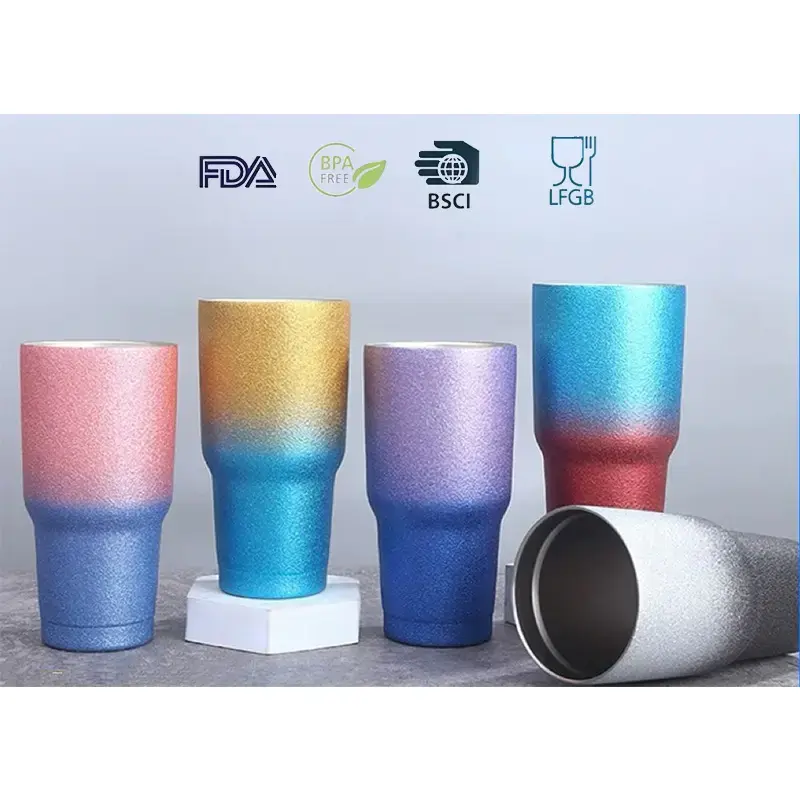
First, minimalist business style—sleek cup shapes that save space, primarily featuring neutral colors like black, white, and gray.
Second, integration of local elements, such as incorporating German castle patterns or French lavender themes. Third, multi-scenario adaptability with interchangeable lids, catering to office, commuting, and outdoor needs.
Japanese brand Zojirushi launched a Europe-exclusive stainless steel cup at the Frankfurt Fair. Featuring a Japanese checkered pattern design and a rust-proof double-layer fluorine inner coating, it was priced at approximately 430 RMB—double the cost of standard Chinese products—yet gained favor in German and French markets, successfully entering local department stores. Drawing from this approach, our minimalist business-style stainless steel cup customized for Dutch clients secured 3,000 orders during the exhibition.
Buyers often ask: Does regionalized design increase customization costs? Small-batch customization (500+ units) adds about 12%-15% to costs, but bulk orders (2,000+ units) spread these expenses. Moreover, regionalized design enhances product premium value and reduces market competition pressure.
IV. Smart Functionality & Lightweight Design: Balancing User Experience and Portability in New Products
At the 2025 exhibition, smart stainless steel cups shifted away from complex features toward lightweight, practical designs. The core focus was on temperature sensing and portability optimization, balancing user experience with everyday usage scenarios.
Key smart upgrades include: 1. Embedded temperature display: Integrating simple sensors into lids for intuitive water temperature readings to prevent scalding. 2. Optimized vacuum insulation: Reducing insulation thickness to 1-2mm for enhanced thermal retention while achieving a more compact, lightweight design. 3. Leak-proof structure: Dual silicone seals for improved commuting safety.
The 2025 Thermos Industry Report indicates that stainless steel cups with basic temperature displays saw a 45% year-over-year sales increase in the European market, particularly favored by professionals. Our lightweight smart stainless steel cup, weighing under 250g with 12-hour heat retention, received 60% more inquiries than standard models during trade shows.
Frequently Asked Questions: Does smart functionality compromise durability? When utilizing mature sensor and sealing technologies, durability remains unaffected. Our products undergo 1,000 open/close cycles and drop tests, with smart components maintaining full functionality. A one-year warranty is provided.
FAQ: Industry Hot Topics
1. What should be the key focus for product selection at the 2025 Frankfurt Consumer Goods Fair?
Prioritize eco-friendly materials (recycled stainless steel, plastic-reducing designs) and products compliant with new EU regulations. New items featuring European-inspired minimalist designs or practical smart functions attract the most attention. Bringing compliance test reports alongside samples enhances customer trust.
2. What compliance certifications are required for exporting stainless steel cups to Europe?
Core certification is EU Regulation (EC) No 1935/2004, covering tests for overall migration and heavy metal migration. Provide laboratory test reports compliant with EN ISO/IEC 17025 and a Declaration of Conformity. Labels must display the cup-and-fork symbol and specify the applicable temperature range.
3. Which segment—premium or budget stainless steel cups—holds greater potential in the European market?
Both segments present opportunities but require distinct positioning: Premium markets can emphasize eco-friendly materials + regionalized design + smart features, targeting middle-class and business professionals with significant premium potential. Budget markets must prioritize cost control, focusing on basic compliance and practical functionality to boost profits through bulk orders. Positioning should align with your supply chain strengths.
The 2025 Frankfurt Consumer Goods Fair in Germany has charted a clear development path for the stainless steel cup industry, where environmental sustainability, compliance, regionalization, and lightweight smart features emerge as pivotal drivers for global market penetration. For cross-border buyers and B2B clients, seizing these trends and selecting products that align with market demands and regulatory standards will secure a competitive edge in the fiercely contested landscape. From material upgrades to design optimization, from compliance management to scenario adaptation, every detail determines a product's market acceptance. Frankfurt Consumer Goods Fair 2025: Trends and Opportunities for Stainless Steel Cup Innovations
Meta Description
Frankfurt Consumer Goods Fair 2025: Decoding Trends and Opportunities for Stainless Steel Cup Innovations. This article dissects four major trends—environmental sustainability, compliance, regionalization, and smart features—while sharing real-world industry cases and cross-border product selection strategies covering key EU regulations. Empowering buyers to accurately navigate market directions, achieve compliant overseas expansion, and capture the European market. For customized solutions, consult directly.
Keywords
2025 Frankfurt Consumer Goods Fair Stainless Steel Cups, Cross-Border Stainless Steel Cup Sourcing Strategy, EU Compliance Requirements for Stainless Steel Cups, Eco-Friendly Stainless Steel Cup Innovations, European Market Design Trends for Stainless Steel Cups