
 +86-13586927333

Thermos cup factory

0102030405
China's Insulated Cup Industry from a Global Procurement Perspective: In-depth Analysis of Manufacturing Advantages
2025-12-03
In today's global supply chain of insulated cups, the position of "Made in China" is no longer merely about "large output", but has formed an overall advantage that is very difficult to replicate. For those engaged in overseas procurement, choosing suppliers is no longer merely about the parameters of individual products; it is more important to consider whether the entire industrial ecosystem behind it can continuously support supply, innovation, and response to changes. From the perspective of procurement professionals, the reason why China's insulated cup manufacturing has been able to firmly occupy a place in the international market lies in several deep-seated competitive advantages that are worth elaborating on.
Industrial clusters: Making speed and stability the norm
When it comes to thermos flasks, it is impossible not to mention the industrial belt in Yongkang-Wuyi, Zhejiang Province. Here contributes over 60% of the global production capacity. The high density has made the supply chain almost a "half-hour circle" - processes such as stainless steel smelting, mold development, electrostatic spraying, and laser marking are basically completed within a 30-kilometer radius. The direct benefit brought by such a layout is speed: a new design can go from drawing to mass production in as little as 18 days. For the purchasers, this means that when the market trend changes, the factories can quickly catch up. For instance, if a certain color scheme suddenly becomes popular during the North American outdoor season, local factories can complete the entire process from raw material procurement to container loading and shipment within three weeks.
What is even more remarkable is the meticulousness of the supporting facilities. There are over two thousand professional supporting factories active around Yongkang. From silicone sealing rings to texture transfer films, there are three or four, or even five or six enterprises dedicated to each part. In this way, the entire chain will not be held up due to a problem with one company, and the delivery received by the purchasing party will be more stable. In contrast, for some emerging manufacturing areas in Southeast Asia, 80% of the core components still have to be transported from the Yangtze River Delta, and the delivery cycle is 40 to 60 days longer than that in China.
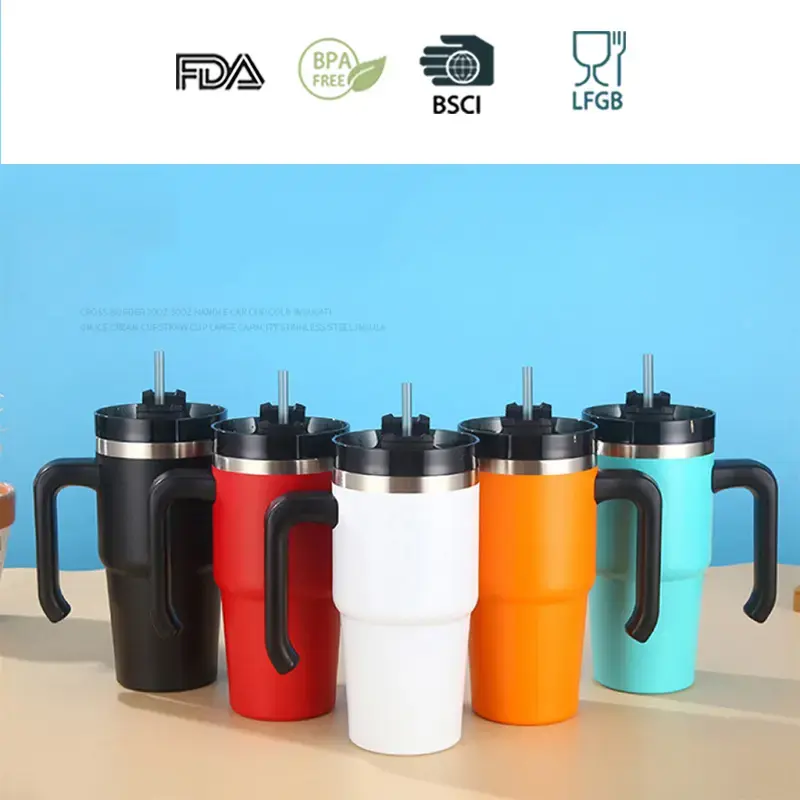
Vacuum process: Achieve insulation close to the physical limit
The accumulation of vacuum insulation technology by domestic leading factories is already very close to the theoretical ideal value. They used a multi-stage vacuuming process combined with an absorbent to achieve a vacuum level of 10⁻³Pa. As a result, the 24-hour heat retention temperature could be stably maintained above 78℃. This technology actually originated from the idea of semiconductor equipment manufacturing, which is equivalent to elevating the thermos from a daily necessity to the level of a precision industrial product.
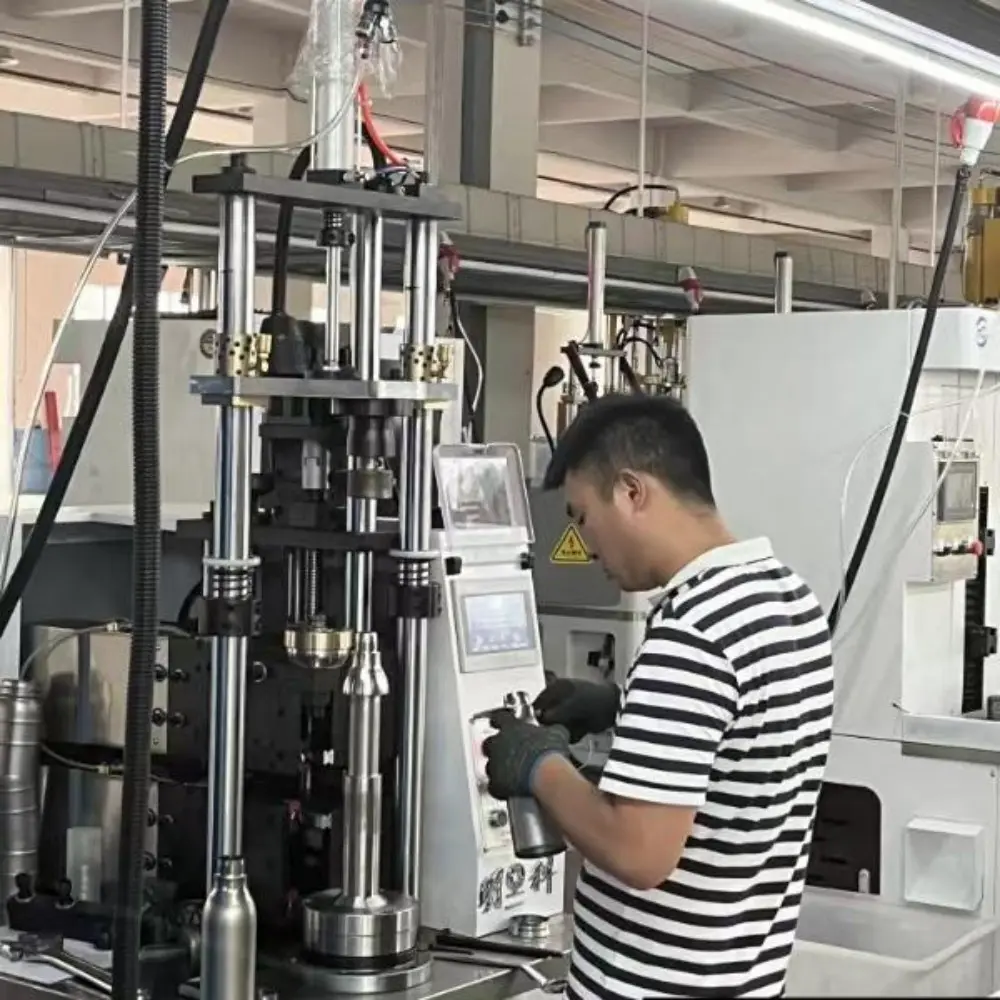
The popularization of automated production lines has also made the quality much more stable. In some advanced factories in Zhejiang, the yield rate of robot welding has remained above 98.5% for many years, and the roughness Ra value of inner tank polishing can be kept within 0.2 microns. This level of precision makes the inner wall less prone to dirt accumulation, precisely meeting the strict standards for food-grade cleanliness in the European and American markets. For bulk purchasing, the defect rate of million-piece orders can be reduced to below 200 ppm, which is much lower than the industry average of three per thousand.
Material Innovation: A Leap from Durability to Lightness
The deepening application of 316L stainless steel in thermos flasks is also a notable label of "Made in China". This molybdenum-containing austenitic stainless steel is much more resistant to chloride ion corrosion than the common 304 material and is particularly suitable for the hot and humid regions of Southeast Asia or the high-salt coastal environments of North America. China's own stainless steel output accounts for more than 30% of the global total. Moreover, domestic steel mills have specially developed precision strip steel with a thickness of 0.4 to 0.5mm for the thermos cup industry, with a thickness tolerance controlled within ± 0.02mm. This not only ensures the pressure-bearing strength but also keeps the weight very light.
The rise of titanium alloy insulated cups better demonstrates the speed of material research and development. Through the cold rolling forming technology of TA2ELI grade titanium materials, domestic enterprises have reduced the weight of titanium cups to less than 180 grams while still maintaining 24-hour heat preservation performance. This lightweight design is highly effective for mountaineers in Japan and South Korea - in high-altitude climbing, every 50 grams less weight is equivalent to saving approximately 3% of physical energy consumption. What the purchaser gets is not only a differentiated product, but also a technical ticket to enter the high-end niche market.

Quality control system: Full-process monitoring from raw materials to finished products
Long-term contract manufacturing for international big brands has made domestic quality control awareness particularly strict. There are over 120 monitoring points throughout the process - steel materials need to undergo glow discharge mass spectrometry analysis upon entering the factory, and finished products also have to go through a 24-hour continuous heat preservation test before shipment. Especially for the control of bisphenol A and heavy metal migration, the new national standard has tightened the lead migration limit to 0.01mg /kg, directly aligning with the requirements of Annex 17 of the EU REACH regulation. This kind of early layout ensures that the purchasing party does not have to worry about having to change suppliers when regulations change one day.
Supply chain resilience: Capable of withstanding challenges and adapting to changes
Even in the face of tariff fluctuations, the adaptability of China's insulated cup industry remains very strong. By flexibly adjusting the FOB terms, setting up overseas buffer bases in Vietnam and Thailand, and leveraging the high premium capacity of the products themselves, external shocks have been effectively mitigated. For instance, the US market once imposed a punitive tariff of 148%, but exports to the US not only did not decline but rose instead. The reason is simple - it is difficult to find an alternative source of the same quality in a short period of time, from mold precision to surface treatment.
Deeper resilience is reflected in the innovation of inventory management. Some advanced factories have already implemented VMI (Supplier Managed Inventory) in hub ports such as Los Angeles and Hamburg, reducing the delivery cycle for purchasers to 7 to 15 days. This model is equivalent to turning "manufacturing in China and serving globally" into a time advantage rather than a distance disadvantage.
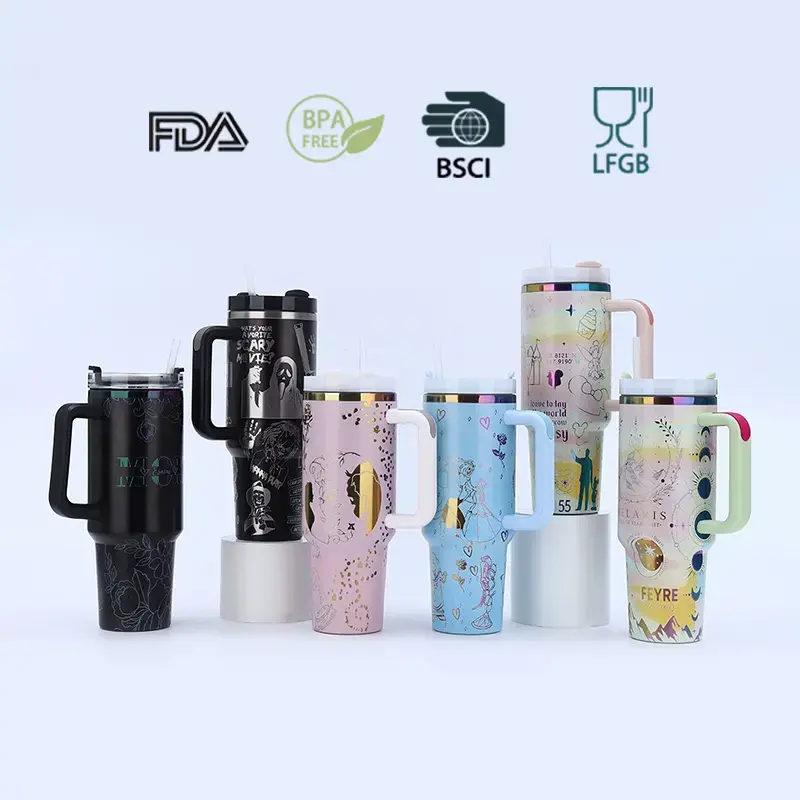
Scenario-based adaptation: Let the product follow the market
The differences in demand among various markets have driven Chinese enterprises to make micro-innovations in their products. In the extremely cold regions of Russia, if the silicone for cup LIDS does not crack even at -40 ℃, then a special cold-resistant formula has been developed. Middle Eastern people love drinking black tea, so a tea-water separation structure was designed. Outdoor hiking is very popular in Northern Europe, so a 1.2-liter large-capacity model has been launched. Such customization capabilities enable purchasers to precisely select products for different regions, avoiding the aesthetic fatigue caused by "selling one product globally".
The speed of environmental protection response is also worth mentioning. The EU has just released a notice that solvent-based coatings will be used until 2026. Leading domestic factories completed the transformation of water-based coating production lines as early as two years ago, reducing VOCs emissions by 90%. The adhesion of the coatings has also passed the QUV 2000-hour aging test. As a result, the purchaser can obtain a green premium, which also conforms to the trend of ESG procurement.
The implicit value of procurement: It's not just about buying products
For experienced buyers, the value of Chinese insulated cups far exceeds the products themselves. The design collaboration capabilities brought by industrial clusters can be deeply involved in the ODM development stage. The automated production line can flexibly accept small-batch and multi-batch orders, facilitating the trial of emerging markets. A well-developed intellectual property layout (Yongkang alone has over five hundred patents in a year) ensures the legal security of the products during global sales.
When evaluating suppliers, these manufacturing advantages will be transformed into quantifiable indicators: on-time delivery rate exceeding 95%, defect rate below 0.05%, new product development cycle less than 25 days, and full coverage of compliance certifications. It is precisely these hard powers that have enabled the Chinese insulated cup industry to continuously expand its influence in the global procurement landscape.