
 +86-13586927333

Thermos cup factory

0102030405
Eco-friendly material options for thermos cups with straws
2025-05-20
When choosing a thermos with a straw, the selection of eco-friendly materials not only helps reduce the impact on the environment but also ensures safety and health during use. The following are some common environmentally friendly materials and their characteristics:
First, food-grade stainless steel
Food-grade stainless steel is a commonly used material for the inner liner of thermos cups and straws, featuring excellent corrosion resistance, high-temperature resistance and oxidation resistance. The common food-grade stainless steels are 304 and 316. 304 stainless steel is suitable for most daily usage scenarios, while 316 stainless steel performs better in terms of corrosion resistance and high-temperature strength. These materials are not only safe and hygienic, but also durable, ensuring long-term use.
Second, silicone
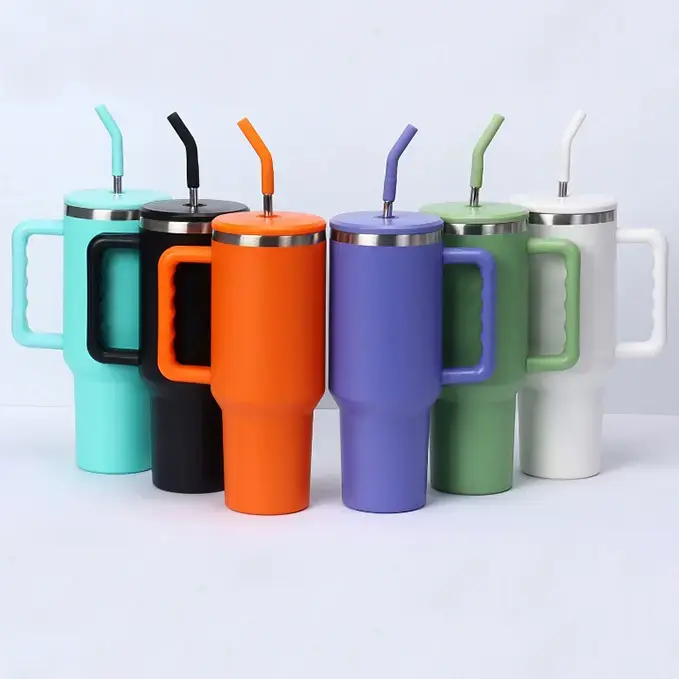
Silicone is an environmentally friendly, non-toxic, high-temperature resistant and corrosion-resistant material, which is often used in the sealing rings of thermos cups and straws. It is soft and shockproof, with good drop resistance and is not easy to be damaged. It is very suitable for outdoor activities and children's use. The thermal insulation performance of silicone material is relatively weak, but its environmental friendliness and safety make it an ideal material for straws.
Third, bio-based plastics
Bio-based plastics are environmentally friendly materials derived from renewable resources, which can degrade in the natural environment and reduce damage to the environment. Some thermos cup brands use bio-based plastics as the outer shell material, which is both environmentally friendly and has good heat preservation performance.
Fourth, paper straws
Paper straws are a biodegradable and environmentally friendly option, usually made of food-grade virgin wood pulp paper. They are produced using three or four layers of food-grade base paper and processed through steps such as gluing, rolling into tubes, slitting and drying. Although paper straws are environmentally friendly, there is still room for improvement in their user experience. For instance, they may become soft or come apart when exposed to high-temperature or acidic beverages.
Fifth, reusable straws
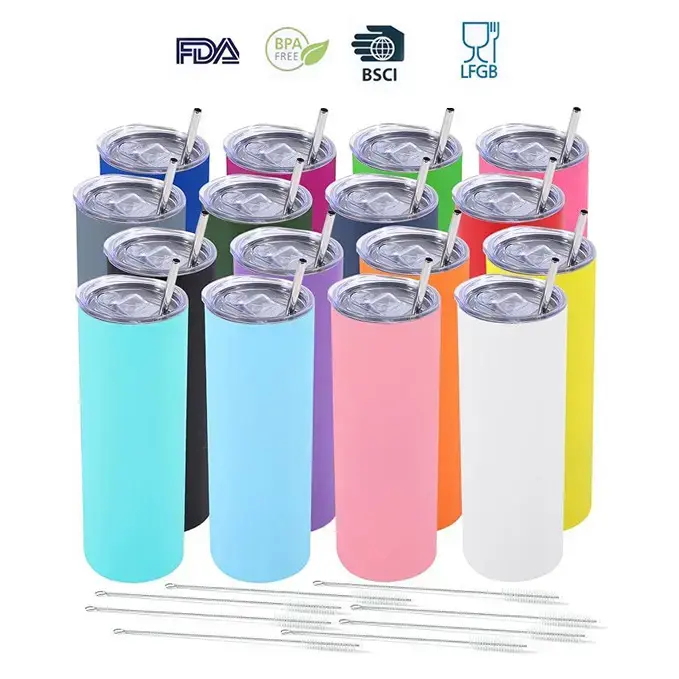
In addition to disposable straws, reusable straws are also an environmentally friendly choice. For example, both stainless steel straws and glass straws are durable and reusable materials. Stainless steel straws have excellent corrosion resistance and oxidation resistance, while glass straws are aesthetically pleasing and do not release any chemicals. Although straws made of these materials need to be cleaned and maintained, they reduce the reliance on disposable plastic straws and are more environmentally friendly.
Sixth, other environmentally friendly materials
Some brands of insulated cups also use environmentally friendly materials such as flexible ceramics and high-performance insulation materials. These materials not only offer excellent thermal insulation performance but also reduce the impact on the environment. In addition, some companies also use recycled materials in product design to reduce carbon emissions.
When choosing a thermos with a straw, it is recommended to give priority to environmentally friendly materials such as food-grade stainless steel, silicone and bio-based plastics. These materials are not only safe and healthy, but also can reduce the impact on the environment. At the same time, choosing reusable straws, such as stainless steel or glass straws, is also a good way to reduce the use of disposable plastics.