
 +86-13586927333

Thermos cup factory

0102030405
Ensuring Performance: Key Methods for Vacuum Layer Integrity
2025-10-24
In today's world that values convenience and sustainability, thermos flasks have become an essential item in the daily lives of consumers around the globe. Its core value lies in its outstanding heat and cold insulation capabilities, which are entirely dependent on a key technology - vacuum insulation. For industry partners seeking high-quality products, it is crucial to understand the integrity of the vacuum layer of a thermos and its evaluation criteria. This article will delve deeply into the detection methods of vacuum layer leakage, scientific judgment criteria, and how these can be directly transformed into the outstanding performance and market competitiveness of the product.
Vacuum insulation technology: The cornerstone of thermal insulation performance
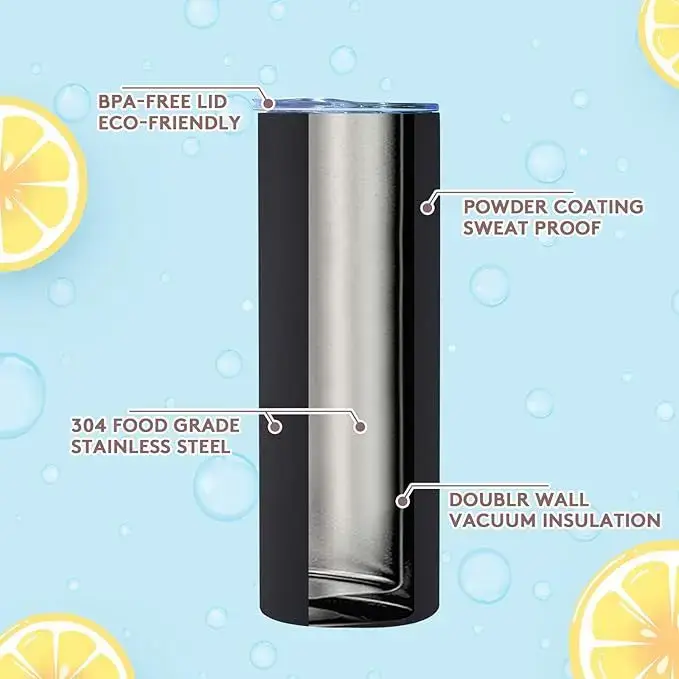
Before delving into the detection methods, we first need to understand why the vacuum layer is so crucial. Thermos flasks usually adopt a double-layer stainless steel structure, creating a high vacuum environment between the two layers of walls. This design aims to minimize the three pathways of heat transfer: conduction, convection and radiation.
Conduction and convection: Under normal pressure, air molecules transfer heat through mutual collisions. When air is evacuated to a state close to vacuum (typically with an internal pressure below 0.001 Pa), the number of molecules drops sharply, making it impossible for effective heat transfer to occur, thereby cutting off heat conduction and convection through the air.
Radiation: To further block thermal radiation in the form of infrared rays, the outer wall of the inner liner of high-quality thermos flasks is coated with a layer of copper or aluminum. This layer of metal coating can effectively reflect radiant heat, keeping it inside the cup or blocking it outside.
Therefore, an intact vacuum layer is the fundamental guarantee for a thermos to maintain heat for more than 6 hours (keeping 95°C hot water above 60°C at a 20°C room temperature) or cold for 24 hours (with ice cubes not completely melting). Any minor leakage will allow air to enter, disrupt the vacuum environment and significantly reduce the insulation performance.
The causes and potential impacts of vacuum layer leakage
Vacuum layer leakage may result from minor flaws in the manufacturing process or severe impacts during transportation and use. Common causes include:
Welding point defects: When sealing a double-layer structure, if there are micro-holes in the weld seam that are invisible to the naked eye.
Material stress: The internal stress generated during vacuuming and cooling of stainless steel may lead to microscopic deformation.
Physical impact: Severe drops or collisions may cause slight displacements in the inner and outer liner structures, damaging the sealing performance.
Once a leakage occurs, external air will flood into the vacuum layer, and its performance degradation is not linear but exponential. Even if only a small amount of air enters, the insulation performance will be greatly reduced and fail to meet the claimed industry standards.
Professional vacuum layer leakage detection methods
To ensure that every product leaving the factory meets high standards, the manufacturer has adopted a series of rigorous testing methods. These methods, ranging from basic to sophisticated, jointly build a reliable quality defense line.
1. Temperature performance test (final performance verification)
This is the most direct and user-scenario-closest testing method. Although it does not directly "see" the leakage point, it can irrefutably prove the effectiveness of the vacuum layer.
Method: Pour hot water of the specified volume and initial temperature (such as 95°C±1°C) into the thermos and tightly close the lid. Let it stand for a specified period of time (such as 6 hours or 24 hours) under specific ambient temperature (such as 20°C±2°C) and humidity.
Measurement: Use a high-precision thermometer to measure the water temperature after standing still.
Significance: This test simulates real usage scenarios and serves as the gold standard for verifying insulation performance. The ultimate goal of all other detection methods is to ensure the passing of this test.
2. Helium mass spectrometry leak detection method (High-precision non-destructive testing)
This is currently the most advanced and sensitive industrial leak detection technology, widely used in industries with extremely high requirements for vacuum degree.
Principle: Place the thermos in a sealed chamber filled with helium gas (as the tracer gas). If there are leakage points in the vacuum layer, tiny helium molecules will enter the vacuum interlayer through the leakage holes. Subsequently, the cup was transported to a detection station, where it was analyzed by a mass spectrometer to determine whether helium gas had escaped from the outside. If there is, it indicates that there is a leakage.
Sensitivity: This method has extremely high sensitivity and can detect leakage rates as low as 10⁻¹² Pa·m³/s, which is equivalent to only a few cubic millimeters of gas leaking over several decades.
Advantages: Non-destructive, fast, highly automated, can be 100% applied to production lines, accurately identify defective products, and roughly locate the area of leakage.
3. Differential pressure method (vacuum degree maintenance test)
This method determines the sealing performance of the vacuum interlayer by monitoring the pressure changes inside it.
Principle: During the manufacturing process, after vacuuming, the pressure value inside the interlayer changes over a period of time through a precise sensor. A complete vacuum layer should have a stable internal pressure. If the pressure reading keeps rising, it indicates that gas is seeping in from the outside, confirming the existence of a leak.
Application: This method is usually used as a key process monitoring point in the production process and can quickly screen out products with obvious leakage.
4. Infrared thermal imaging Method (Qualitative Visualization Analysis
This is an auxiliary and very intuitive detection method.
Principle: Pour hot or ice water into the thermos, and then use an infrared thermal imager to scan the outer wall of the thermos. A cup with an intact vacuum layer should have an outer wall temperature close to the ambient temperature, and its thermal image should show a uniform cold tone (for hot water). If the vacuum layer fails, heat transfer will cause a significant increase in the temperature of the cup wall near the leakage point, which will appear as an abnormal hot spot on the thermal image.
Advantages: Non-contact and imageable, which helps to quickly locate the leakage area and is used for fault analysis and sampling surveys.
The core criterion for judging the integrity of the vacuum layer
For procurement decisions, clear and quantified judgment criteria are indispensable. A high-quality insulated cup must meet the following core standards:
1. Performance data standards
This is the most crucial procurement acceptance criterion. Products must pass strict laboratory tests and provide verifiable data:
Insulation standard: At a room temperature of 20°C to 25°C, when filled with 95°C hot water, the water temperature should not be lower than 60°C after 6 hours.
Cold preservation standard: At room temperature of 20°C to 25°C, add an appropriate amount of ice cubes. After 24 hours, there will still be a large amount of ice cubes remaining in the cup.
2. Process manufacturing standards
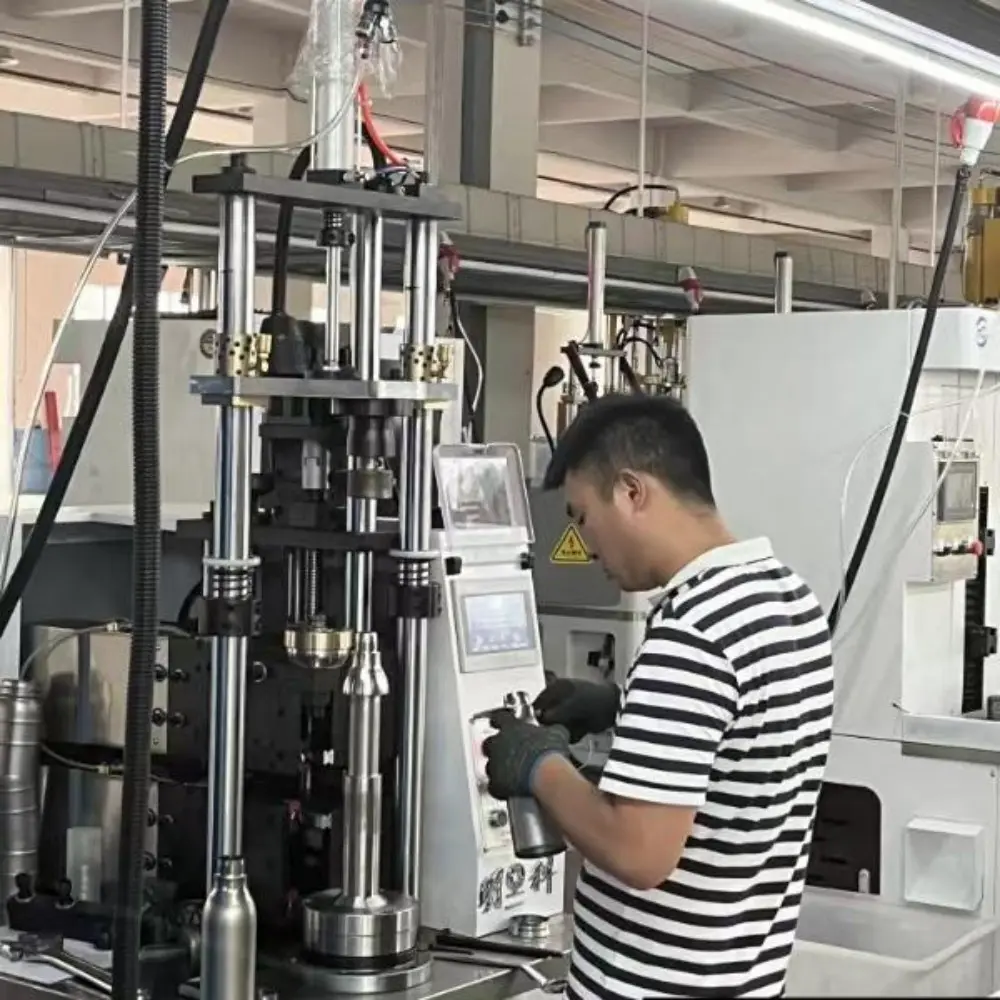
100% online leak detection: The manufacturer shall commit to conducting helium mass spectrometry leak detection or equivalent precision detection on every product leaving the factory and provide corresponding quality control records.
Extremely low vacuum loss rate: Under strict process control, the vacuum loss rate of the product at the factory should be controlled below a few ten-thousandths (PPM level). This directly reflects the manufacturer's quality control level.
Structural integrity: The cup body has no depressions or deformations, and the sealing welds are smooth and uniform. All these are the physical basis for ensuring long-term vacuum stability.
Conclusion: Transform professional testing into market trust
The dedication to the integrity of the vacuum layer of a thermos goes far beyond the assessment of a single technical aspect. It represents a commitment to product quality, respect for user experience, and the cornerstone for building a long-term brand reputation. By adopting cutting-edge technologies such as helium mass spectrometry leak detection and adhering to strict performance data standards, manufacturers can ensure that every thermos cup sent to the market has reliable and long-lasting heat preservation performance.
For you, choosing a production partner that deeply understands and strictly adheres to these testing standards means you will obtain products that are of outstanding performance and reliable quality. This not only effectively reduces after-sales risks, but also builds a solid trust in the minds of end consumers through the outstanding performance of the product itself, ultimately winning a lasting advantage in the highly competitive market. When your customers unscrew the cup LIDS and enjoy the just-right temperature at any time, the attention you have paid to product quality traceability today will be rewarded in the warmest way.