
 +86-13586927333

Thermos cup factory


0102030405
How do fitness studios choose suppliers of sports water bottles
2025-11-26
The operational logic of fitness studios is transforming from a single venue rental model to a comprehensive health solution. As a high-frequency contact point for members' daily training, the Sports Water Bottle has been upgraded from an accessory consumable to a brand experience carrier and an entry point for value-added services. The selection of qualified suppliers directly affects member satisfaction, brand image building and long-term operating cost control. This decision requires a systematic evaluation framework that goes beyond the product itself.
Safety certification system: The primary threshold for supplier access
Sports water bottles come into direct contact with drinking water. Safety and compliance are the bottom-line standards for procurement decisions. Suppliers must provide complete migration test reports for food contact materials, detection data for heavy metal leaching amounts, and screening certificates for plasticizers. The European and American markets require compliance with FDA 21 CFR or EU 10/2011 regulations of the European Union, while the Asian market needs to meet the GB 4806 series of national standards. It is worth noting that in some regions, fitness regulatory authorities have incorporated water bottle material certification into the venue rating system. Unlicensed products may lead to operational qualification risks.
The difference in laboratory testing capabilities is the key to the stratification of suppliers. High-quality suppliers are equipped with traceable batch inspection systems. Samples of each batch of products are retained for future reference, and the list of raw material suppliers is made public. During the inspection, it is necessary to request to review its quality manual and pay attention to whether a full-chain quality control node from raw material entry to finished product exit has been established. For fitness studios that offer children's training courses, whether the supplier meets the specific safety standards for children's products should be an additional assessment item.
The cleanliness level of the production environment is equally important. Dust control in the injection molding workshop, microbial monitoring on the assembly line, and temperature and humidity management in the warehousing process - these details directly affect the hygiene level of the products. During on-site inspections, observing whether the workshop is divided into clean and non-clean areas and whether employees follow standardized cleaning procedures can better reflect the true management level than checking paper certificates.
Customization capability: The realization path of brand differentiation
The core competitiveness of a fitness studio lies in its brand uniqueness. The depth of customization of the kettle determines its effectiveness as a brand medium. The design support capabilities of suppliers should be evaluated from three levels:
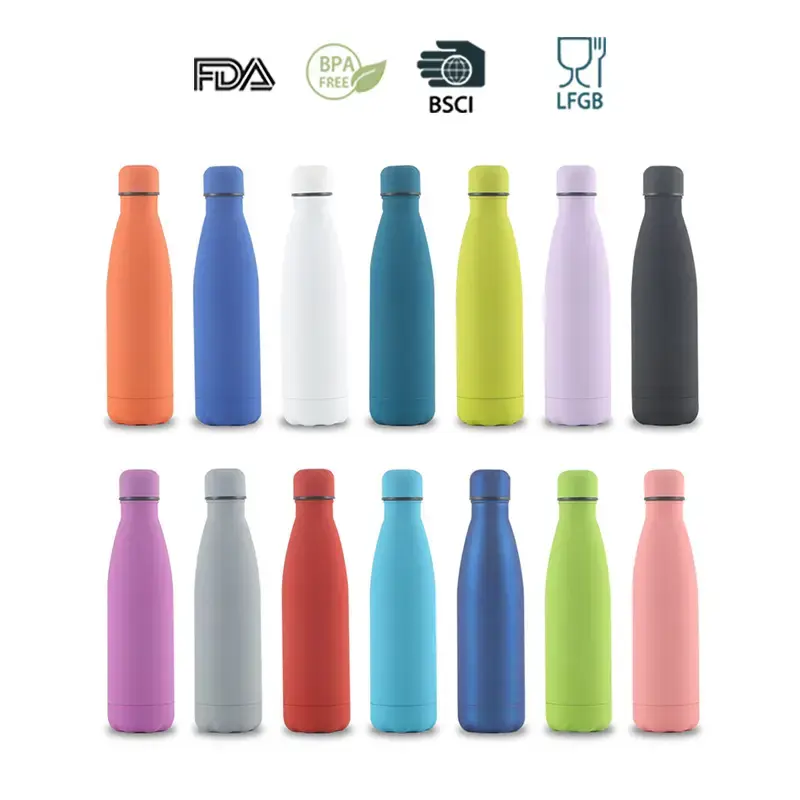
Integration of visual recognition systems. The basic level includes the accuracy of the cup body color matching with the brand color card Pantone and the wear resistance test data of the Logo printing. Advanced capabilities are reflected in the flexibility of mold development - whether non-standard designs such as the texture of the cup body and the curvature of the handle can be achieved. Top suppliers offer 3D modeling preview services, allowing for virtual prototyping before mass production and significantly shortening the development cycle.
Customized functional modules. For high-intensity interval training (HIIT) courses, suppliers can be required to integrate protein powder storage bins and stirring grids to meet the immediate replenishment needs after training. For yoga studios, custom-made meditative cup shapes with leak-proof designs are available. Whether the supplier has a modular design platform that can quickly combine different functional units reflects its technical response speed.
Packaging experience design. The unboxing experience at the time of water bottle delivery affects members' perception of the brand's professionalism. Whether the supplier can provide personalized packaging boxes, user manual cards, and even QR code labels linked to the fitness APP, these details constitute a complete brand touchpoint chain. The packaging options of eco-friendly materials should also be taken into consideration, in line with the health concept of the fitness industry.
Supply chain resilience: A core element for ensuring continuous operation
The operational rhythm of a fitness studio requires suppliers to have a highly stable delivery capability. To assess the resilience of a supply chain, it is necessary to penetrate the surface promises and examine the underlying structure:
Capacity elasticity. Understand the actual utilization rate and peak production capacity of the supplier's production line, and confirm whether it can meet the bulk purchasing demands brought about by the growth of members. The ideal supplier should maintain a capacity redundancy of 20-30% and have the ability to rapidly expand production within 15-30 days. Inquire about the safety stock cycle of its raw materials, especially the stocking strategy for core components such as sealing rings and nozzles.
Logistics response speed. Against the backdrop of fluctuations in the global supply chain, the diversity of logistics solutions provided by suppliers is of vital importance. In addition to standard sea freight, is there an express air freight option available? Should regional sub-warehouses be set up to shorten the delivery time? For cross-border procurement, whether suppliers are familiar with the customs clearance document requirements and labeling regulations of the destination country and can provide DDP (Delivery after Tax) services directly affects the efficiency of procurement execution.
Risk management mechanism. Mature suppliers should establish emergency response plans for unexpected events, such as backup production lines in case of key equipment failure, alternative solutions when raw materials are in short supply, and price locking mechanisms when exchange rates fluctuate. It is required that they provide the on-time delivery rate data and records of handling abnormal events for the past three years. These historical performances are more convincing than any quality assurance statement.
Product innovation pace: The key to keeping members fresh
The retention of members in the fitness industry relies on continuous experience innovation. As a frequently used item, the functional iteration ability of water bottles affects member stickiness. The intensity of the supplier's R&D investment is the primary observation indicator - the proportion of the R&D team size to the total number of employees, the frequency of annual new product launches, and the number of patents held.
Application of Materials Science and Technology Tritan copolyester material replaces traditional PC, addressing the concerns of bisphenol A while enhancing transparency and impact resistance. The composite structure of a stainless steel inner liner and a plastic outer shell not only ensures insulation performance but also reduces weight. Whether suppliers track these material innovations and quickly introduce them into mass production determines the market competitiveness of the products.
Intelligent integration. Some new types of water kettles are integrated with water volume monitoring sensors, which transmit data to the fitness tracking app of members via Bluetooth to achieve a water replenishment reminder function. Although not standard, whether a supplier has such technical reserves reflects its ability to grasp future trends. The compatibility design of smart accessories, such as data connection with wearable devices, should be included in the long-term cooperation assessment.
Ergonomic optimization. In view of the increasing proportion of female members, is the diameter of the cup suitable for small hands to hold? Has the biting force of the suction nozzle undergone biomechanical testing? These detailed optimizations require suppliers to have user research capabilities and a rapid prototyping verification mechanism. Require it to present user test reports and iterative design records to verify its culture of data-driven improvement.
Environmental responsibility: An extension of brand values
The fitness studio advocates a healthy lifestyle, and environmental protection commitments have become an important part of the brand narrative. The sustainable development practices of suppliers should be aligned with the values of the studio:
Material traceability. Can the supplier provide proof of the content of recycled materials? Does its plastic raw material include Marine recycled plastic or plant-based materials? Is low-carbon smelting process adopted for stainless steel material? These certifications are not merely marketing gimmicks but also preparatory measures to deal with increasingly strict environmental protection regulations.
Produce carbon footprint. Examine whether the supplier has conducted carbon emission accounting and whether it has a clear roadmap for emission reduction. Some leading enterprises have achieved 100% renewable energy supply for their production lines and have passed the ISO 14064 carbon verification certification. Collaborating with it can help fitness studios achieve their own carbon neutrality goals and form a positive narrative in ESG reports.
Circular economy design. Does the supplier offer a recycling plan after the kettle's life cycle ends? Is a single material design that is easy to disassemble adopted for easy recycling? Is the market supply cycle of replaceable parts such as sealing rings and nozzles promised to be no less than five years after the product is discontinued? These design thinking reflect the long-term sense of responsibility of the enterprise.
Flexibility of cooperation models: From transactional relationships to strategic alliances
Procurement relationships should not be limited to buying and selling. The depth of a supplier's services determines the upper limit of the value of cooperation.
Minimum order quantity policy. For start-up studios, does the supplier offer a small-batch trial sales plan? Is it supported to purchase mixed colors and styles to reduce inventory pressure? The flexible MOQ policy demonstrates the supplier's understanding and willingness to support the customer's growth stage.
Joint marketing support. High-quality suppliers can provide product photography materials, social media content templates, and even member collaboration activity plans. Some suppliers open up their membership systems, allowing fitness studios to share their brand event resources and form a mutually beneficial ecosystem.
Data sharing mechanism. Can the supplier provide product sales data analysis to help the studio optimize the SKU combination? Will it open up its members' usage behavior research to guide the studio in designing more relevant fitness courses? This two-way flow of data elevates cooperation to a strategic level.
Implementation path of the decision-making framework
Establish a scoring card system and assign weights to the above dimensions: safety certification accounts for 30%, customization capability for 25%, supply chain resilience for 20%, product innovation for 15%, and environmental responsibility for 10%. Invite 3 to 5 candidate suppliers for trial production and sample making, organize member focus groups to conduct blind tests, and collect real usage feedback. Before making the final decision, it is required to provide confidential recommendation letters from more than three similar fitness studios and undergo at least one round of on-site review.
Choosing a supplier of sports water bottles is essentially about finding a reliable physical carrier for the brand promise of the fitness studio. In an era of comprehensive awakening of health awareness, this decision transcends the functional level of products and extends to the transmission of brand values, the shaping of member experiences, and the construction of long-term competitiveness. Establishing a rigorous evaluation system will help fitness studios identify partners who can truly grow side by side in the complex market and jointly define the standards for the next generation of healthy lifestyles.