
 +86-13586927333

Thermos cup factory

0102030405
In-depth Analysis of Straw Material Safety: Comparison of Characteristics among Silicone, Stainless Steel and Plastic
2025-10-22
In the purchasing decision of thermos cup accessories, the choice of straw material not only affects the service life of the product, but also directly influences the health and safety of consumers. As the regulation of food contact materials in various countries becomes increasingly strict, it has become particularly important to understand the differences in the characteristics of different materials. This article will systematically analyze the performance characteristics of three mainstream straw materials to provide technical references for your purchasing decisions.
First, an overview of safety standards for straw materials
International regulatory framework for food Contact materials
The major global markets all have strict regulations on food contact materials. The EU Framework Regulation (EC) No 1935/2004 requires that all food contact materials must comply with safety standards, while the US FDA controls materials through the 21 CFR series of regulations. The GB 4806 series of standards in China also put forward clear requirements for materials such as plastics and rubber used in food contact.
The core principle of these regulations is to ensure that materials do not transfer harmful substances to food under normal usage conditions. Migration testing usually simulates actual usage conditions, including factors such as time, temperature and food type.
Key indicators of material safety
When evaluating the safety of straw materials, the following parameters should be given particular attention:
Overall migration limit: The total amount of non-volatile substances that migrate from materials into food
Specific migration limit: The migration amount of specific harmful substances (such as heavy metals, plasticizers)
Sensory requirements: It must not cause abnormal odors or flavors in food
Microbial indicators: Especially the hygiene requirements for reusable straws

Second, analysis of the material properties of silicone straws
The technical advantages of medical-grade silicone
Silicone, as a kind of polymer material, its chemical structure determines its excellent stability. Food-grade silicone is usually produced by platinum catalytic addition process, which avoids the possible residue problems that may occur in traditional peroxide catalysis. This material can maintain stable performance within the range of -60℃ to 250℃ and is suitable for high-temperature disinfection.
From a safety perspective, the volatile organic compound content of high-quality silicone is less than 50μg/g, which is much lower than that of most plastic materials. Its hydrophobic surface characteristics are also not conducive to microbial adhesion, and the bacterial adhesion rate is more than 60% lower than that of plastic.
Physical performance and user experience
The Shore hardness of silicone straws is usually between 40 and 60A, which can ensure sufficient softness without affecting their use due to excessive deformation. Its tear resistance strength can reach 15-25kN/m, and its service life is more than ten times that of ordinary plastic straws. It is worth mentioning that silicone material can still quickly return to its original state after repeated compression, with a permanent deformation rate of less than 5%.
Third, engineering considerations for stainless steel straws
Material selection and surface treatment
Stainless steel used for food contact is usually of grade 304 or 316. These two types of chromium-nickel stainless steel have excellent corrosion resistance. The key indicator is that the migration amounts of heavy metals such as lead and cadmium must comply with the requirements of the EU 84/500/EEC directive.
The surface treatment process directly affects the safety of use. Electrolytic polishing treatment can form a dense passivation film, reducing the migration of metal ions. The Ra value of the inner wall roughness should be controlled below 0.4μm to prevent the accumulation of dirt. Advanced magnetic drive polishing technology can reduce the Ra value to 0.1μm, significantly enhancing cleanliness.
Structural design and safety protection
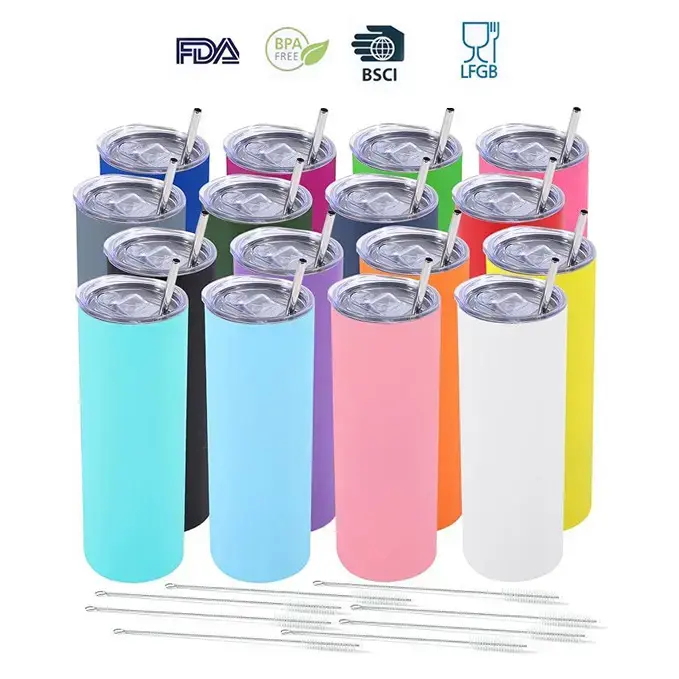
The edge treatment of stainless steel straws is particularly important. Advanced laser cutting combined with secondary mechanical polishing can ensure that the mouth of the straw is smooth without burrs. For children's usage scenarios, it is recommended to be equipped with a silicone straw head or adopt a rolled edge design to prevent accidental injuries.
Thermal conductivity is a characteristic that requires special attention for stainless steel straws. Its thermal conductivity is over 300 times that of plastic, and it may cause discomfort due to temperature conduction during use. A double-layer vacuum structure or an external cladding layer design can effectively improve this problem.
Fourth, the material science perspective of Plastic straws
Selection of polymer materials
Traditional plastic straws are mostly made of polypropylene (PP) material, with a melting point ranging from 160 to 170 degrees Celsius, meeting the requirements for use at normal temperatures. However, in recent years, bio-based materials such as polylactic acid (PLA) have developed rapidly. Their raw materials come from renewable plant resources, and their carbon footprint is over 50% lower than that of petroleum-based plastics.
From the perspective of molecular structure, the crystallinity of PP material can reach 50-70%, which determines its rigidity and heat resistance. As a polyester material, the hydrolytic stability of PLA is a key point that needs attention, especially when it is in long-term contact with hot water.
Additives and modification technologies
The performance of plastics largely depends on the additive system. Antioxidants can prevent thermal oxidation degradation during processing and use, while light stabilizers slow down the aging process when used outdoors. It is worth noting that phthalate plasticizers have been strictly restricted in food contact materials, and modern environmentally friendly plasticizers such as tributyl acetyl citrate (ATBC) are gradually becoming mainstream.
Through nano-modification technology, nano-scale clay or silica can be added to the plastic matrix, which can enhance the material's barrier performance by 2 to 3 times while maintaining transparency and processing fluidity.
Fifth, material comparison and procurement decision support
Full life cycle assessment
From the perspective of sustainable development, the environmental impact of materials needs to be comprehensively considered
Silicone: The production process consumes a relatively high amount of energy, but it has a long service life and can be reused more than 500 times
Stainless steel: The energy consumption for raw material extraction is high, but the recycling rate can reach over 90%
Plastics: mainly for single use, with a Marine degradation cycle of up to 200 years. For bio-based plastics, attention should be paid to industrial composting conditions
Carbon footprint analysis shows that after being reused 100 times, the carbon emissions from a single use of stainless steel straws are reduced to the minimum. Silicone needs to be used more than 50 times to demonstrate its environmental protection advantages.
The applicable scenarios are matched with the technology
Different materials are suitable for different usage scenarios:
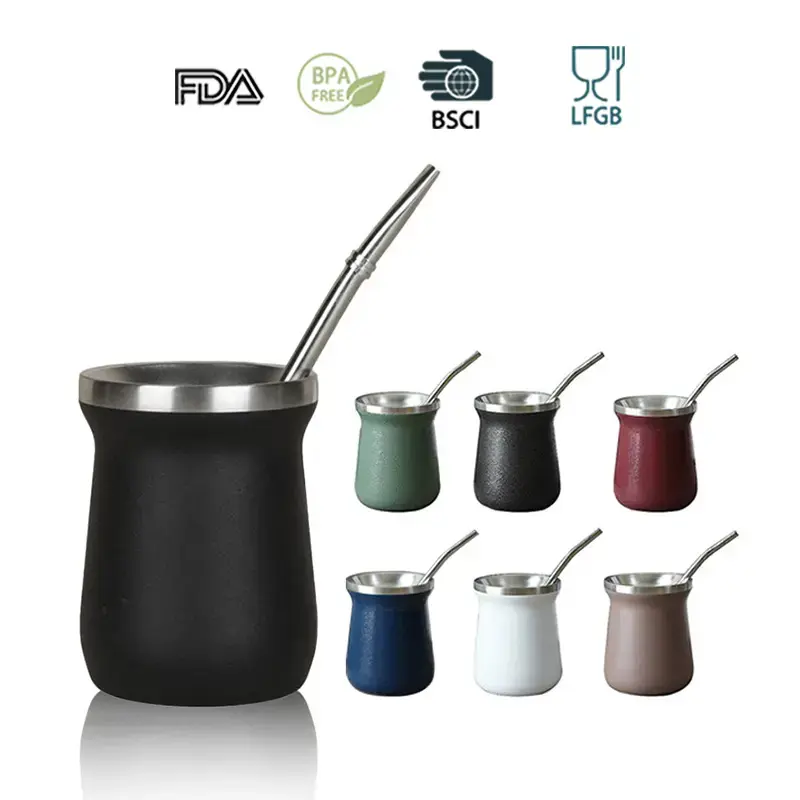
Children's group: Silicone is the first choice. It is soft, safe and has good bite resistance
Outdoor sports: Stainless steel is highly durable, but attention should be paid to temperature conduction
Daily office work: Plastic straws are lightweight and economical, suitable for single use
Special requirements: For medical environments, medical-grade materials that can be sterilized under high pressure should be selected
Key points of quality control
During the procurement process, key attention should be paid to:
Certification qualifications: Whether it has passed international certifications such as NSF and LFGB
Test report: Whether the migration test data complies with the latest standards
Production process: Whether the injection molding process is completed in a clean workshop
Batch consistency: Whether the fluctuation range of material properties is controllable
The selection of straw material needs to balance multiple factors such as safety, performance, cost and environment. Silicone has obvious advantages in terms of safety and user experience, stainless steel is known for its durability, and plastic materials are transforming towards being bio-based and degradable. Wise purchasing decisions should be based on a deep understanding of materials science and combined with the specific needs of the target market to select the most suitable technical solution.
With the continuous advancement of material innovation, we look forward to seeing more new types of straw materials that are both safe, environmentally friendly and practical come into being. Continuous attention to the development of material technology will help you maintain a leading position in the market competition.