
 +86-13586927333

Thermos cup factory

0102030405
The evolution of international certification standards for 304 stainless steel cups and their impact on procurement
2025-12-05
In the eyes of ordinary consumers, a stainless steel cup might just be a tool for holding water. But those who have been in our line of work for a long time know that from a 304 stainless steel plate to the dazzling array of cups on the final shelves, there lies an extremely complex and constantly evolving international standard system in between. These standards silently shape the face of the global supply chain and also determine the risks and values of every B-end procurement decision.
Today, let's not talk about specific brands. Instead, let's sit down and discuss the stories behind these standards and how they have fundamentally changed the logic of industry procurement.
From "Code Name" to "Threshold" : The Identity Change of 304 Stainless Steel
Twenty years ago, the term "304 stainless steel" was more like a conventional "code name" in the industry. Everyone knows that it refers to austenitic stainless steel containing 18% chromium and 8% nickel, which has good corrosion resistance and is suitable for making tableware and utensils. When making purchases, it is more dependent on the "guarantee" from the supplier and a few simple material certificates.
Change occurs quietly. With the deepening of global trade and the soaring attention of consumers to safety and health, 304 has gradually evolved from a material code into a "quality threshold" that needs to be precisely verified. The core turning point lies in the market's realization that there are still advantages and disadvantages under "304" - the content of key impurity elements and the stability of the smelting process directly affect the safety and durability of the product.
As a result, a series of international standards have moved from behind the scenes to the forefront and become the "common language" at the procurement negotiation table.
The evolution of core standards: Not limited to just one certificate
At present, the global cup procurement field mainly refers to several major standard systems, each with its own focus, jointly weaving a safety net.
ASTM standards, especially ASTM A240, clearly stipulate the chemical composition and mechanical property requirements for grade 304 stainless steel. It is like a "birth certificate", defining what constitutes a qualified 304. Nowadays, merely claiming "304 material" is far from enough. Test reports that meet ASTM standards (especially the supplementary requirements for the migration amounts of heavy metals such as lead and cadmium) have become hard currency for market access in North America and many high-end markets.
Eu Food Contact Materials Regulation (EC) No 1935/2004 and its specific measures: The EU framework places greater emphasis on "declaration of conformity" and "traceability". It requires that the product be fully controllable from raw materials to finished products, ensuring that no part in contact with food releases harmful substances under normal usage conditions. This places extremely high demands on the transparency of the supply chain. For cups entering the European market, it is no longer sufficient for suppliers to merely provide the final product inspection reports. Being able to showcase the quality control records of each link from steel mills to stamping, polishing and welding is becoming a new competitive edge.
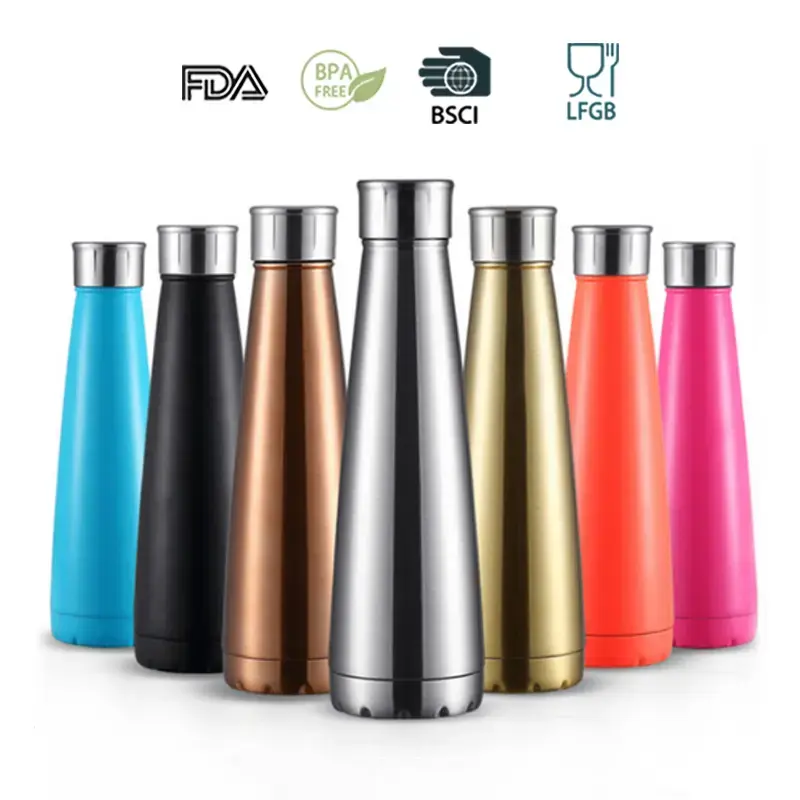
German LFGB (Food and Feed Codex) and French DGCCRF: These are more stringent "national versions" of standards. For instance, the testing standards of LFGB are usually more stringent than the general standards of the European Union, with a particular focus on comprehensive migration tests and sensory tests (to ensure there are no unpleasant odors). It is like an "elite certification". Products that meet its requirements often enjoy a higher reputation premium in the global market.
China's GB 4806.9-2016 standard: As the world's largest manufacturing country, China's national standards have rapidly aligned with international standards and become stricter in recent years. The limit on the migration amount of heavy metals in the GB standard is highly consistent with that of the EU standard. A product that complies with Chinese national standards and has an authoritative CNAS testing report is now a reliable pass to enter many emerging markets, such as Southeast Asia and the Middle East, as local importers are increasingly inclined to refer to this mature and strict standard system in China.
The core trend of the evolution of standards is to shift from "terminal product inspection" to "full-process control", and from "compliance" to "traceability".
The Profound Impact on Procurement Strategies: From "Price Procurement" to "Value and Risk Management"
This increasingly meticulous standard system is reshaping the decision-making logic at the procurement end.
First of all, the focus of procurement assessment has fundamentally shifted. In the past, purchasing specialists might have devoted 70% of their energy to price negotiations and delivery dates. Nowadays, professional purchasing teams will first "audit" the compliance with standards. Does the supplier have authoritative test reports for the target market issued by internationally recognized laboratories (such as SGS, Intertek, BV)? Can the production environment and process flow of its factory support continuous compliance? This has become a prerequisite for cooperation rather than a negotiable bargaining chip.
Secondly, the supply chain has become shorter and more transparent. The complex traceability requirements have made many large purchasers no longer satisfied with placing orders through multiple layers of traders. They are more inclined to cooperate directly with manufacturers that have strong quality control capabilities and even have their own stamping and welding factories. Only by deeply engaging in the production process can we ensure that every step from the batch of steel at the source to the final product meets the standards. This trend of "supply chain flattening" is particularly evident in the procurement of high-end cups.
Furthermore, certification has become a key tool for market access and bargaining. Having comprehensive and targeted international certifications is no longer just an additional cost. It directly determines which level of market your product can enter. For instance, a product line that simultaneously meets ASTM, LFGB and GB standards can be flexibly supplied to high-end markets in North America and Europe as well as emerging markets in Asia. This gives purchasers great flexibility in planning inventory and logistics, and greatly enhances the risk resistance capacity of their own supply chains. On the contrary, products lacking the corresponding certifications will have their sales channels severely restricted, and even if the price is low, it will be difficult for them to enter the mainstream channels.
Finally, let's talk about the "need for silence" in specific scenarios. Take the Southeast Asian market, which has a humid and hot climate and a large consumption of beverages, as an example. Consumers there use iced drinks all year round and have higher requirements for the corrosion resistance (to prevent rust caused by salt spray corrosion) and condensation effect of the cups. 304 stainless steel that meets strict international standards, due to its stable material properties, can better cope with high-humidity environments and maintain a smooth appearance and safe drinking water for a long time. This instinctive fit with the usage environment is the deep-seated product power that transcends the appearance design.
Conclusion: Find the position in the standard coordinate system
Ultimately, engaging in the procurement and supply of stainless steel cups today is already a practice of finding a position within a precise standard coordinate system. It tests not only manufacturing capabilities, but also the depth of understanding of global rules, the ability to build a quality system, as well as the transparency and resilience of the supply chain.
For the purchasers, when choosing partners, they need to look beyond the "price" itself and focus on the solidity of their compliance with standards. This is no longer about dealing with inspections, but rather the foundation for effectively managing long-term business risks, safeguarding brand reputation, and providing truly safe and reliable products to end consumers.
In this era where standards define quality, those who deeply understand and practice these rules will ultimately bring more trustworthy value to the market.