
 +86-13586927333

Thermos cup factory


0102030405
Thermos cup with straw: A drinking water solution suitable for children
2025-07-29
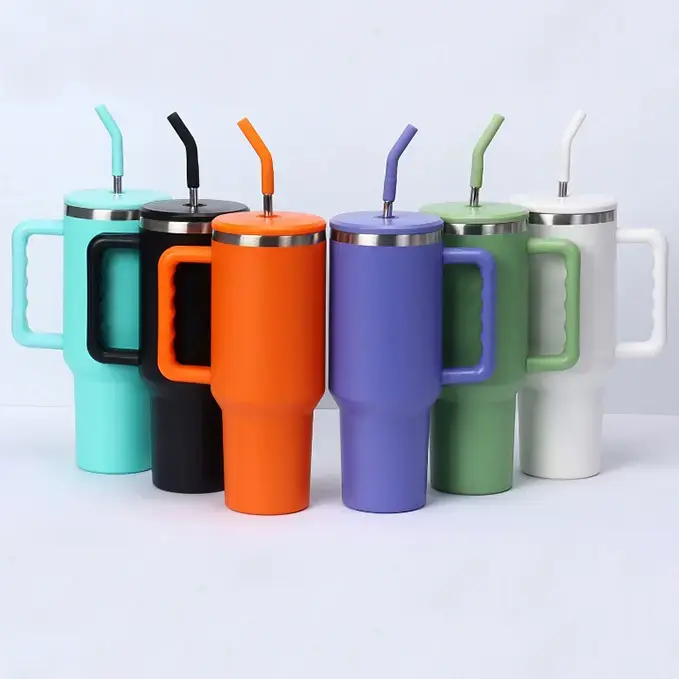
For parents, getting their children to drink plenty of water and drink enough is often a headache - the water cup is too heavy to hold, they get splashed all over when drinking water, and they don't want to drink water when it gets cold... The thermos with a straw is like a tailor-made drinking tool for children. It can not only solve these small troubles but also gradually help children develop the habit of drinking water actively. It is not a simple combination of a thermos cup and a straw, but a practical and good product designed based on children's usage habits and safety needs. This article discusses why thermos flasks with straws are suitable for children and how parents should choose them.
Making children fall in love with drinking water: The ingenious Design of Straws
Children's feelings about whether it is good or not are very direct. A thermos with a straw can make drinking water easy and interesting, and naturally they are willing to take a few more sips.
The Angle of the straw is just right for children to drink with their heads down. Children's necks are not fully developed yet. When drinking water from ordinary cups, they have to tilt their heads back, which can easily cause choking. The straw of the sippy cup extends obliquely upwards, allowing children to easily hold it while sitting or walking without having to deliberately adjust their posture, making it smoother for them to drink. Especially for babies who have just learned to drink water by themselves (aged 1 to 3), straws can help them control the amount of water they drink, preventing them from swallowing too much at once and causing choking, gradually building a sense of security when drinking water.
The design of the straw opening is very considerate. Straws for young children are usually made of soft silicone, as soft as pacifiers. When children put them in their mouths, they won't resist, and when they bite into them to play, they won't hurt their gums. For slightly older children (aged 4 to 6), straws that are a bit harder can be chosen, but the edges must be smooth to avoid cutting their mouths. Some straws are equipped with "valves", so they won't leak when the child is not using them. Even if the cup falls over, the schoolbag won't get wet. Mothers no longer need to worry about their children spilling water on clothes or textbooks.
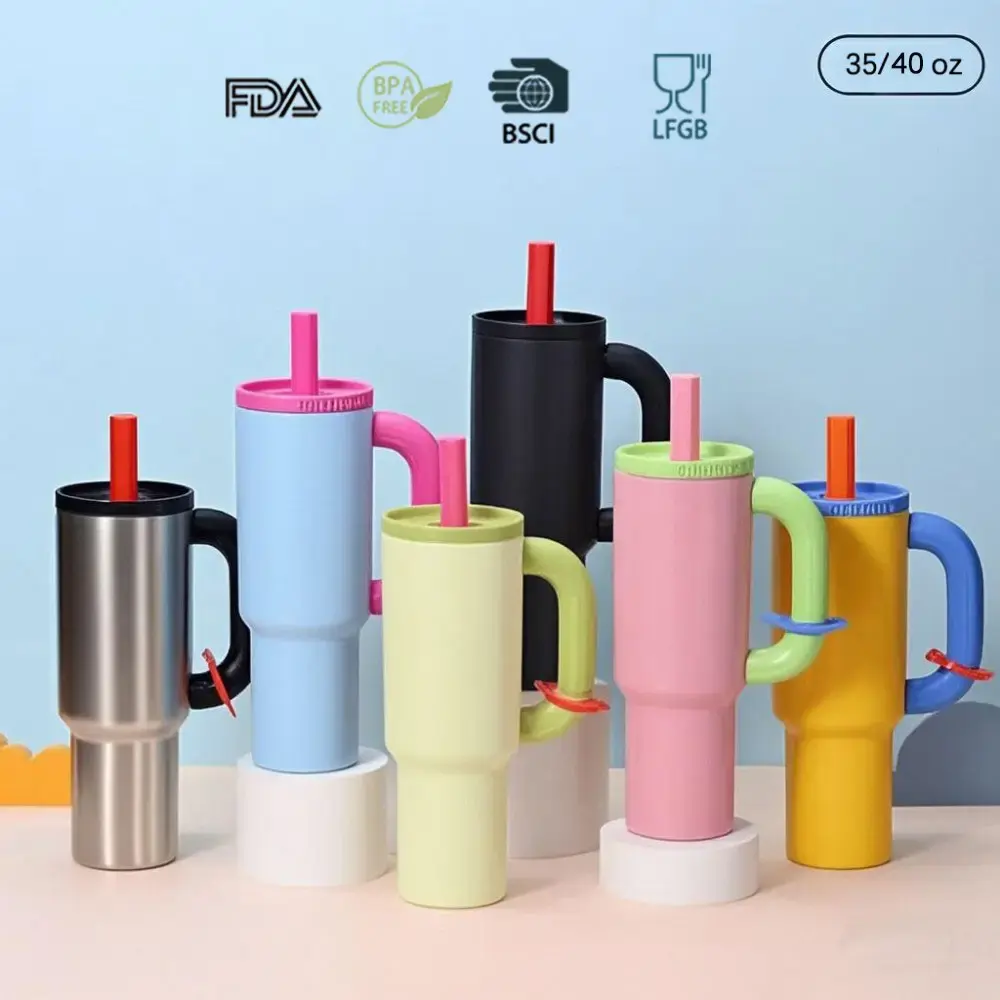
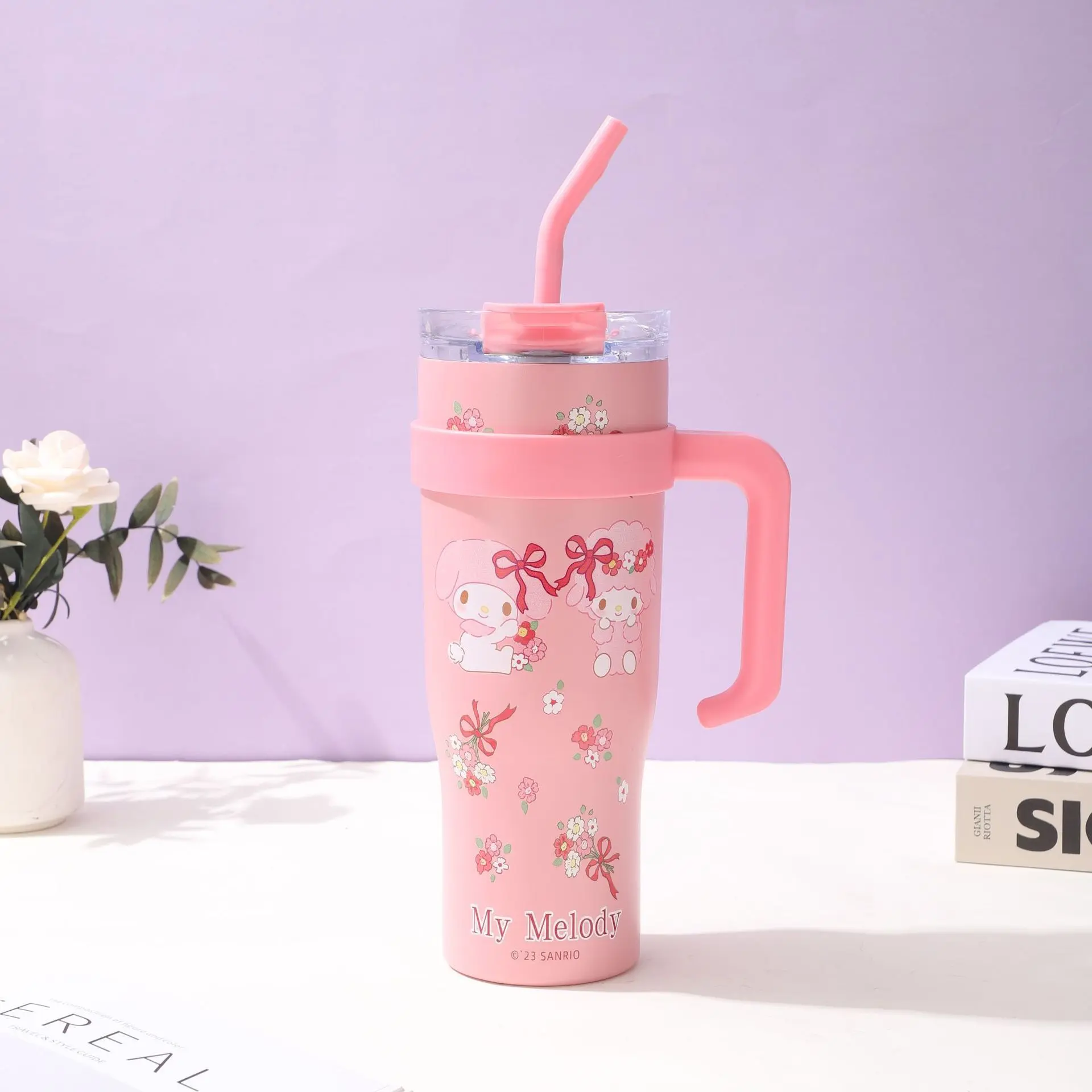
A thermos with a straw enables children to control the pace of drinking water by themselves. In kindergartens or schools, when children want to drink water, they don't have to trouble the teacher to open the lid or pour water for them. They can drink by themselves through a straw and put it on the table casually after drinking. This sense of "independence" will make them more willing to drink water voluntarily. Many children also take drinking water as a happy thing because they like the shape of the cup (such as those with cartoon patterns or bright colors), changing from "I have to drink" to "I want to drink".
Thermos cups suitable for children: These details are very important
When choosing a thermos with a straw for children, it's not enough to just look at it. Safety, ease of holding and durability are more crucial. After all, it's something they use every day.
Leak prevention is the top priority. The child's schoolbag is stuffed with books and toys. The thermos cup is bound to be squeezed and turned upside down. It is essential to choose a leak-proof design - after tightening the lid, it won't leak no matter how you shake it. You can try checking it this way: Fill it with water, close the lid tightly, turn it upside down and leave it for a few minutes. Then shake it vigorously. If no water seeps out from the straw opening and the edge of the lid, it is considered qualified. The switch of the cup lid is best to be "one-click pop open", so that the child's little hand can easily press it without accidentally knocking it open and causing water leakage due to being too loose.
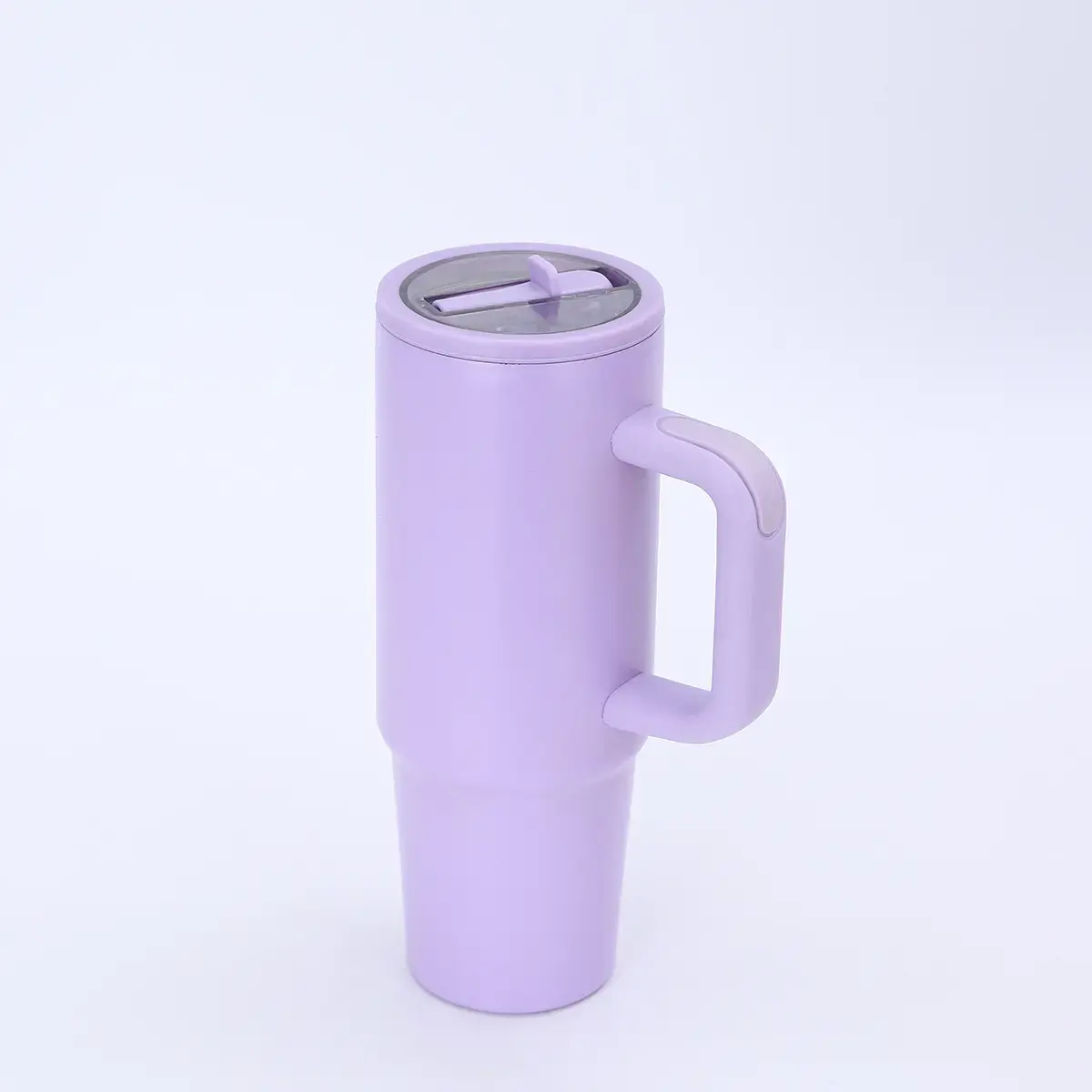
The handle or shoulder strap should be suitable for children to hold. For babies aged 1 to 3, who have little strength, it is advisable to choose a thermos with a handle (the handle width is 5 to 6 centimeters, just wide enough to hold), which makes it convenient for them to pick up the cup by themselves. Children over 4 years old can choose the one with a shoulder strap, which can be hung on the schoolbag so that they can drink water at any time when going to school or playing outside. The material of the handle and the shoulder strap should be sturdy, and there should be no burrs at the seams to avoid rubbing the child's hands or shoulders.
The capacity should be selected according to age. For kindergarten babies, a cup of 300 to 400 milliliters is just right. Fill it with water in the morning and it will be enough for them to drink until noon when they go home. The weight of the cup (about 500 grams when filled with water) can be easily carried by the child. Children in primary school can choose a 500-milliliter bottle to meet their daily water intake at school, so they don't have to frequently ask the teacher to refill their water. A cup that is too big for a child to hold, while one that is too small requires frequent filling with water, which is actually troublesome.
The insulation effect doesn't need to be "overly pursued", but it should be sufficient. Children drink water slowly. If the water is too hot, it can burn their mouths. A thermos with a straw can keep the water warm for 4 to 6 hours, which is just right. The warm water (around 40℃) filled in the morning will still be warm by noon, neither too cold nor burning the mouth. If it's winter, choose the one that has been kept warm for 6 to 8 hours so that you can drink it until the afternoon. In summer, you can choose one with a cooling function. Filling it with ice water can keep you cool and children will love to drink it more.
Safety First: How to Choose Materials with Peace of Mind
When it comes to things for children, material safety is the bottom line. For thermos flasks with straws, the parts that come into contact with water and the mouth must be made of non-toxic and harmless materials.
The cup body is preferred to be made of stainless steel, and food-grade 304 or 316 stainless steel should be selected (indicated on the packaging). This stainless steel is corrosion-resistant and will not rust when filled with juice or milk, nor will it have a metallic taste that affects the taste of water. Be careful not to choose Stainless Steel Cups that are too cheap. They may be made of inferior materials and are not safe to use for a long time. If children like to throw things, stainless steel cups are more durable than plastic cups and can be used for a longer time.
Choose silicone or PP material for straws and cup LIDS. Silicone straws are soft, elastic, heat-resistant (can be washed in boiling water), and are not prone to bacterial growth. The PP material lid is lightweight, shock-resistant and easy to clean. Avoid accessories made of recycled plastic or inferior rubber. Do not buy those with strange odors as they may contain harmful substances.
The sealing ring of the cup lid is also very important. It must be made of food-grade silicone, with good elasticity and a tight fit to ensure leakage prevention. Moreover, when cleaning, it can be removed and washed separately to avoid dirt accumulation in the gaps. When choosing a thermos for children, it is best to pick one with fewer accessories and easy disassembly. After washing it every day, you can scald it with boiling water once to thoroughly disinfect it, which makes you feel more at ease when using it.
Tips for helping children develop the habit of drinking water
When children first use a straw thermos, they may find it novel. Parents can take this opportunity to encourage them to drink more water. For instance, tell children, "After drinking water, the cup will become lighter," allowing them to experience the sense of achievement from "drinking water." Or draw scales on the cups and agree, "Drink this line in the morning and that line in the afternoon," to encourage them in a game-like way.
Adjust the water temperature according to the child's activity level. When playing outdoors in winter, the water temperature can be a little higher (45℃) to avoid it getting cold too quickly. In an air-conditioned room in summer, it is more comfortable to have a lower water temperature (30℃). Don't fill children with water that is too hot (above 50℃), as the straw may conduct heat and burn their mouths.
Replace the straw and sealing ring regularly. Silicone straws may become hard and crack after long-term use, and the sealing rings may age and lose elasticity. Generally, they should be replaced every 3 to 6 months to ensure safe use and leak-proof effect. Letting children clean their cups by themselves (a simple rinse) on a regular basis can cultivate their sense of responsibility and also make them cherish their Water Cups more.
The thermos with a straw is like a "little helper" for parents. With its thoughtful design, it solves various small problems for children when drinking water. More importantly, it enables children to gradually develop the habit of drinking water actively in a relaxed and autonomous experience. Choosing a safe and practical straw thermos cup can make children drink water with peace of mind and parents less worried. After all, it's very reassuring to see children holding the cup and drinking water voluntarily.